
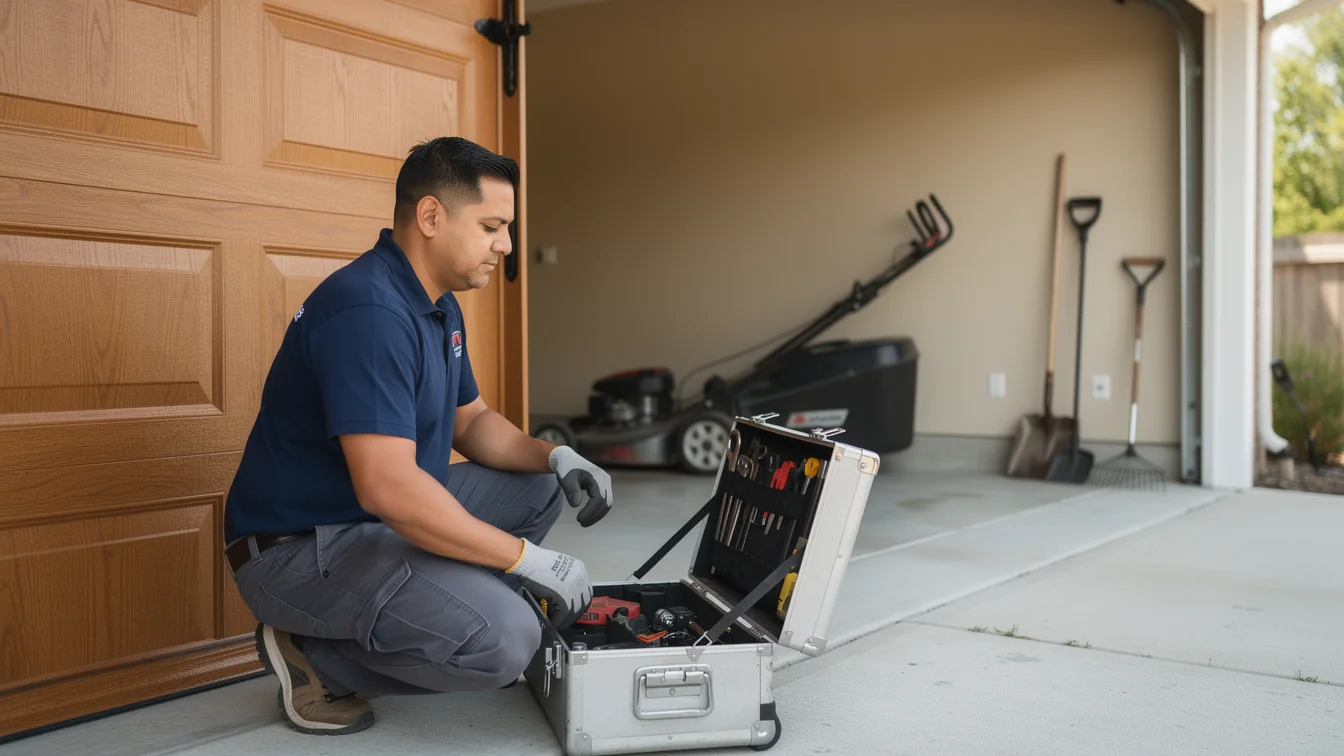
 What's Actually Included When You Call for Garage Door Service
A service call in Georgetown checks hardware built for 1980s-90s construction and mild-climate wear - here's what gets inspected, adjusted, and left alone.
What That Sound Is Actually Telling You
Georgetown homes built between 1957 and 2018 carry different hardware, and that age gap plus the mild-with-freeze climate changes what a grinding or popping door is actually telling you.
Local detail
The Situation
Most calls we get start the same way: "it's making a noise it didn't used to make." In Georgetown that noise means different things depending on when the house went up. Housing stock here spans 1957 to 2018, with a median build year around 1993, and the bulk of it clustered in the 1980s and 90s across the ten or so named subdivisions we work in. A door from a mid-80s build is running on different track, roller, and spring hardware than a door installed in the 2010s. A loud metal-on-metal squeal on an older torsion setup is usually dry bearings or a worn roller that's outlived its lubrication schedule. The same squeal on a newer nylon-roller door usually points somewhere else, often a bracket working loose rather than the roller itself. We can't tell you which one you have without looking, but we can tell you that guessing based on a generic checklist written for a different climate or a different decade of construction gets people the wrong fix more often than not.
The area
How Local Conditions Play In
Our climate band is mild with occasional freeze, not the deep freeze-thaw cycling that tears apart hardware in colder regions, and not the humid coastal corrosion either. That matters for noise diagnosis. In places with harder winters, a sudden winter rattle usually means contracted metal and tightened clearances. Here, a new rattle that shows up on one of our rare cold mornings is more often a spring that was already a little loose finally announcing itself, not a material failure caused by the cold itself. Steady state temperature swings are smaller, so hardware doesn't go through the aggressive expansion and contraction that loosens bolts and bends track in harsher climates. That means if your door is suddenly noisy here, the cause is more likely wear that was already building than a weather event that just happened. We look at the hardware's age against the 1957-2018 build range before we look at the thermometer.
What we find
Doing Nothing For Now
Not every noise needs a truck out that day. A light rattle on a door that still opens and closes evenly, on a house built anywhere in that 1980s-90s range that makes up most of our local stock, can often wait a week or two without getting worse. What can't wait is a grinding sound paired with the door hesitating partway up, or a loud bang followed by the door refusing to move at all. That's usually a spring, and springs under tension don't give you a grace period. The honest limitation here: we don't do phone diagnoses for anything beyond a basic triage question. A noise that sounds minor over the phone can be a cable about to let go, and we're not going to guess wrong just to save you a visit. If it's hesitating, grinding, or banging, that's a same-week call, not a someday call.
How we work
The Common Mistake
The mistake we see most in Georgetown is treating every door the same regardless of when the house was built. Someone reads a generic tip to spray silicone on noisy rollers, and it works fine on a 2015 build with factory nylon rollers, then they try the same fix on a house from the earlier end of our range with older steel rollers and open-bearing hardware, and the noise comes right back in a week because the real problem was bearing wear, not lack of lubricant. The fix that works depends on what's actually installed, which depends on when the house was built and which of the local subdivisions it's in, since build decades cluster differently across the area. We'd rather tell you that than sell you a tune-up that treats a 1990s door like it rolled off a 2018 lot.
Questions
Common questions
Why does my garage door squeal only in the morning?
In our mild climate with occasional freeze, cold mornings tighten clearances slightly on worn hardware, so a bearing or roller that's already marginal will complain more at 40 degrees than at 75. It's not the cold causing damage here the way it would in a harder freeze zone, it's the cold exposing wear that was already present.
Is a banging noise always a broken spring?
Not always, but a loud bang followed by the door being hard or impossible to lift by hand usually is. Springs carry the full weight of the door, and when one lets go it's sudden, not gradual. If that happens, stop using the opener and call rather than trying to force it.
Does the age of my house matter for this?
Yes. Houses here were built anywhere from 1957 to 2018, and the hardware installed tracks the build era. A door's rollers, bearings, and spring type differ enough between decades that the same noise can have a different cause depending on when your house went up.
Recommendation
You Might Also Like
More garage door guides for Georgetown homeowners.
What's Actually Included When You Call for Garage Door Service
A service call in Georgetown checks hardware built for 1980s-90s construction and mild-climate wear - here's what gets inspected, adjusted, and left alone.
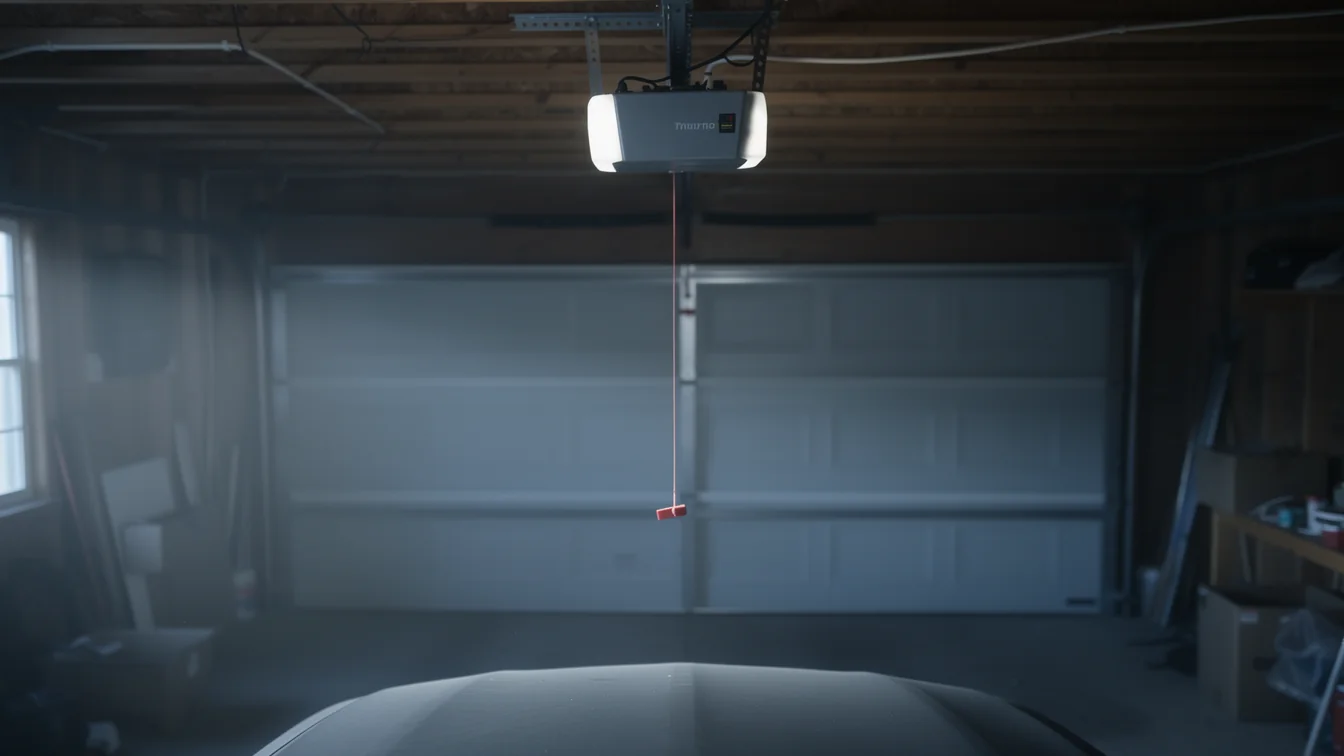 When the Power Drops, What Does Your Georgetown Garage Door Actually Do
Georgetown homes built mostly 1980s-2018 run openers that behave differently in a power cut.
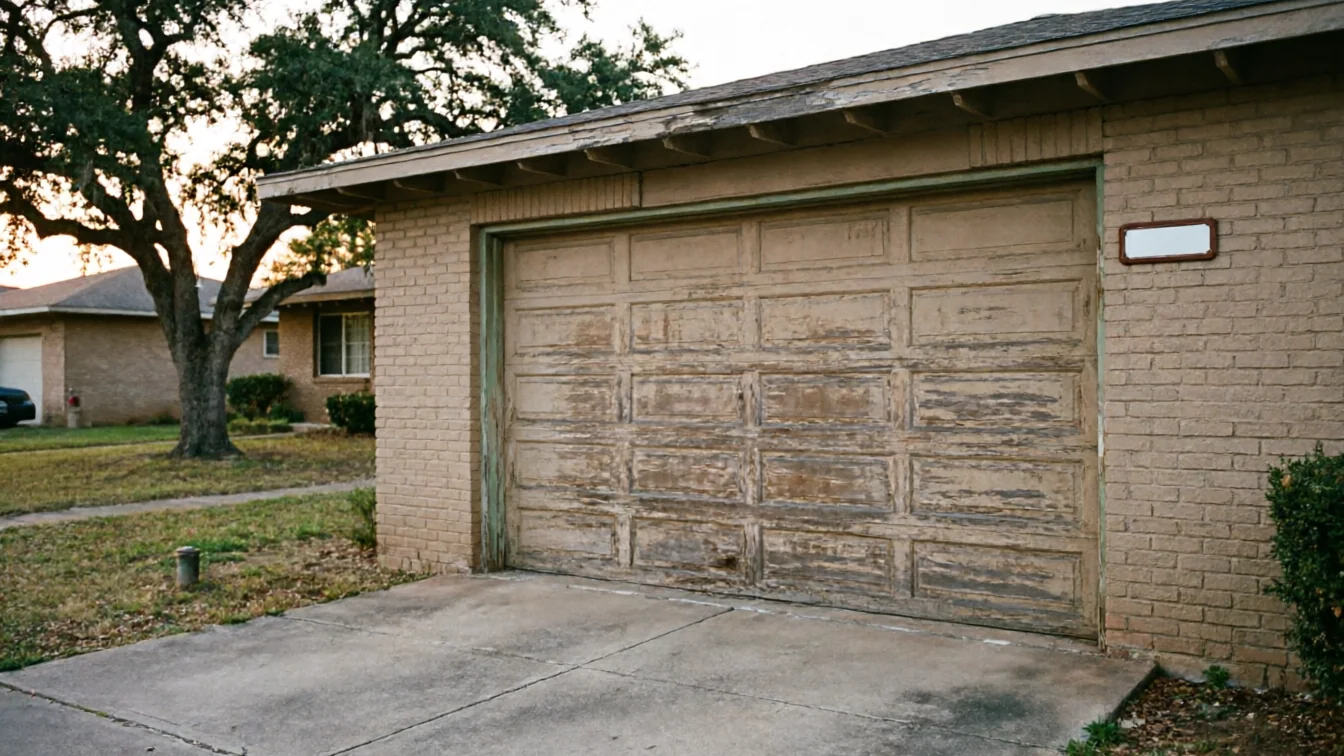 When an Older Georgetown Garage Door Is Still Worth Fixing
A look at when a 1980s or 90s garage door in Georgetown is worth fixing versus replacing, based on local housing age and climate.
Ready when you are
Need a garage door sorted in Georgetown?
Georgetown Garage Door Pros repairs and installs garage doors, springs and openers in Georgetown, TX and the surrounding area.