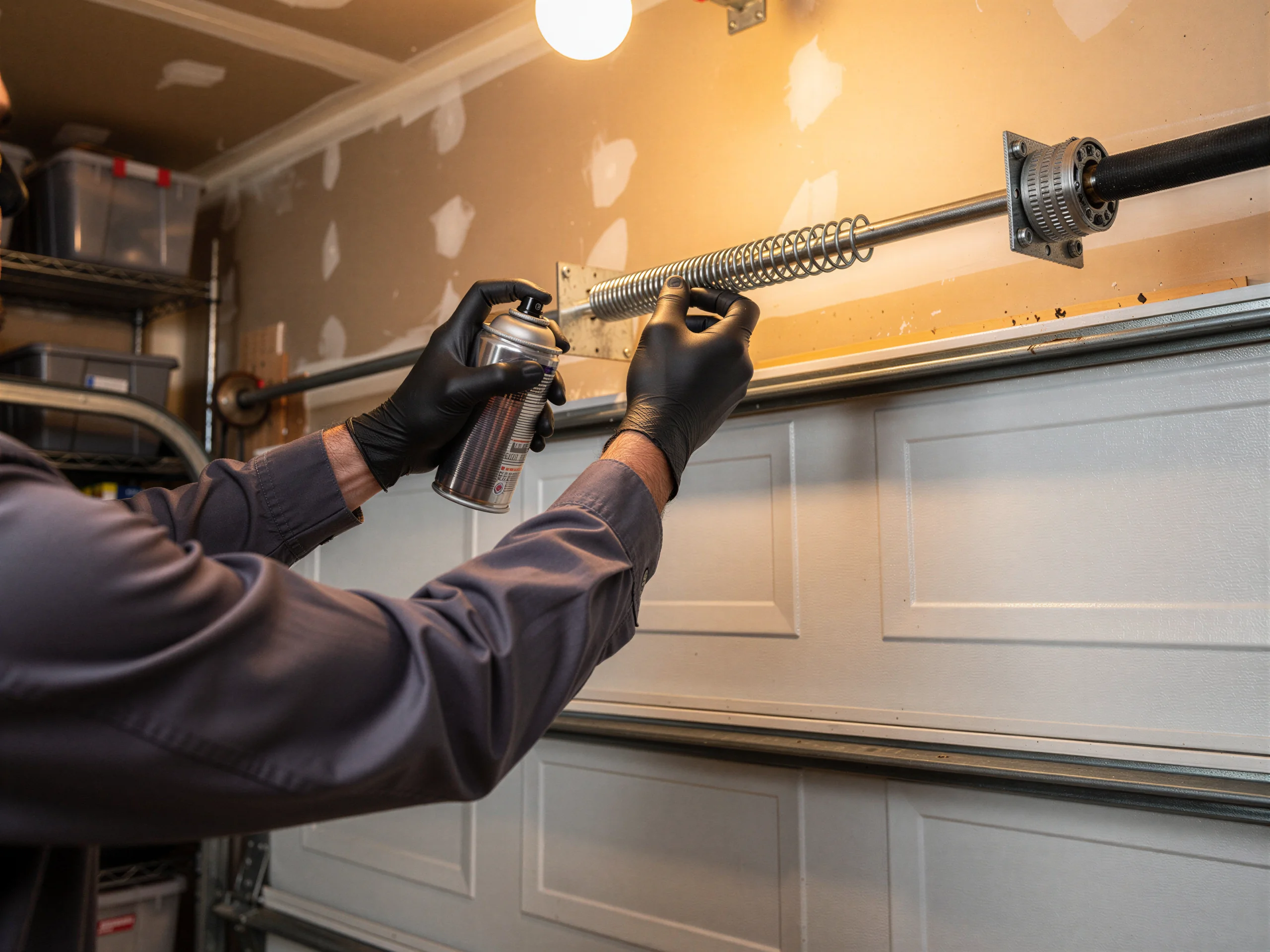
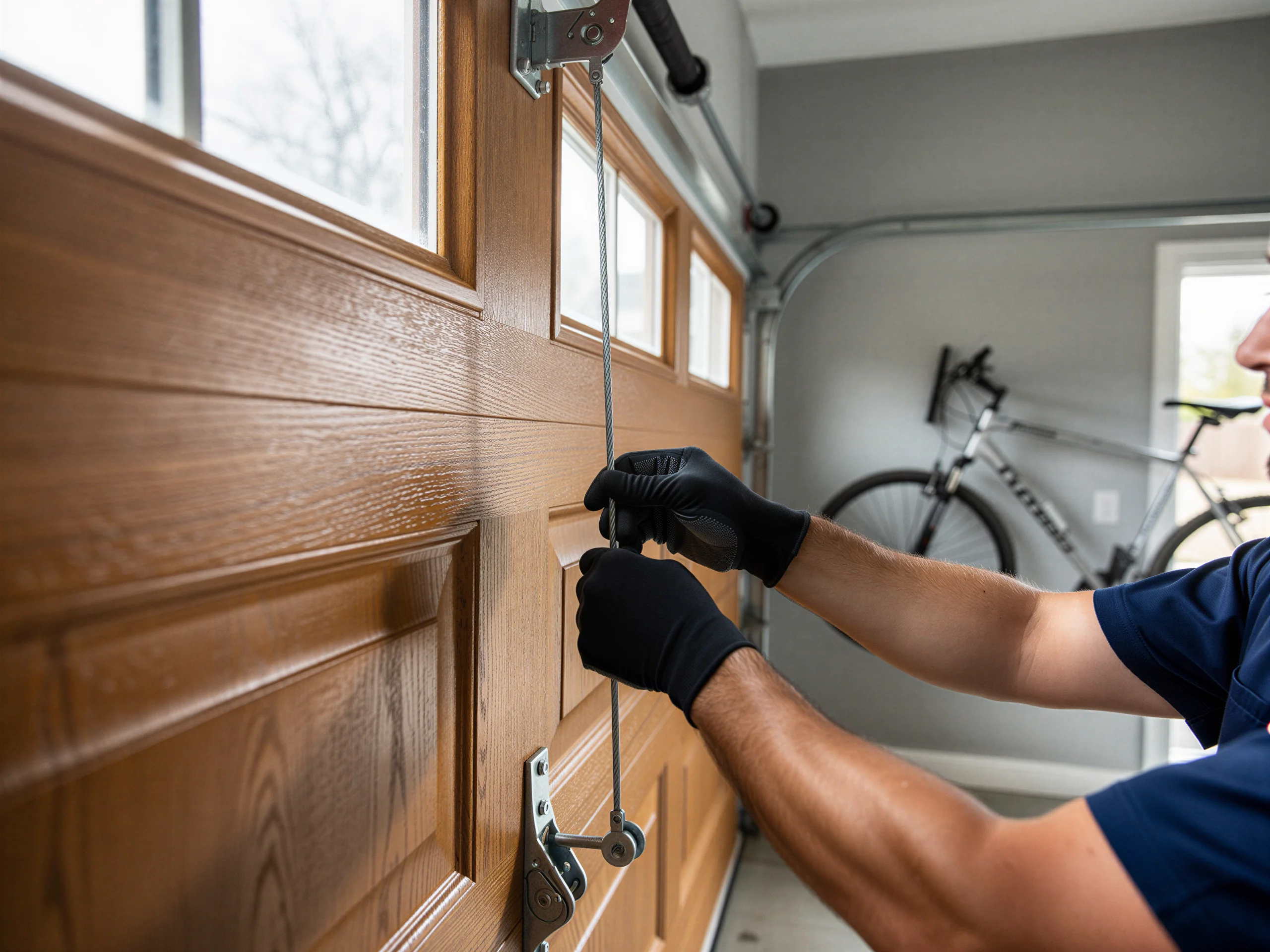
The Symptom
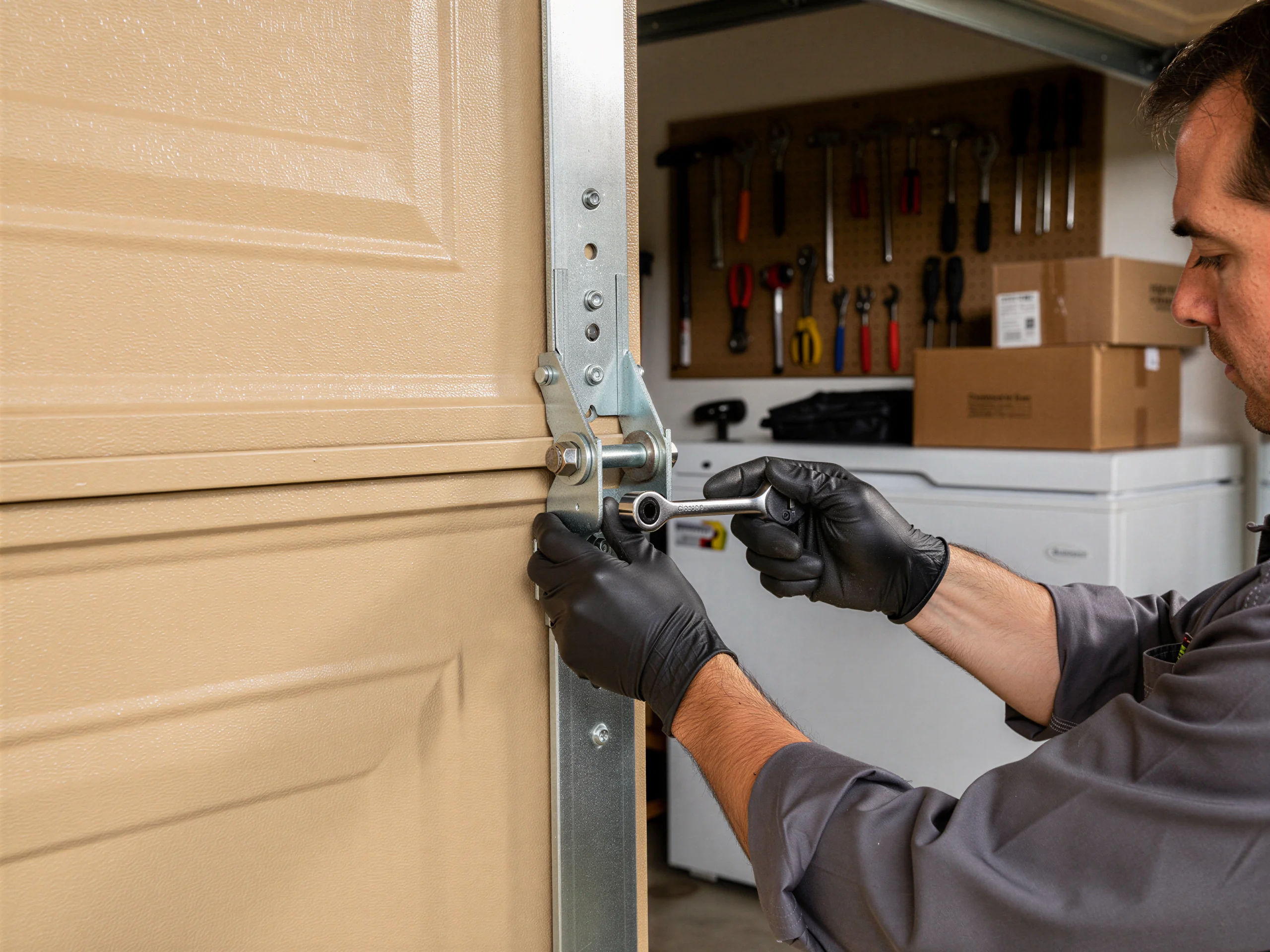
A door that drops crooked, hangs lower on one side, or slams the last foot of travel is almost always a cable problem, not a spring problem, though the two get confused all the time. You might hear a snap, see a loose cable coiled near the bottom bracket, or notice the door binding in the track right before it jams. Sometimes the opener still runs the motor but the door doesn't move at all, because a cable has come off the drum and the system has nowhere to send the force.
Cables carry the full weight of the door on their way down and take the brunt of the spring's pull on the way up. When one frays or slips off, the door is no longer balanced side to side, and every cycle after that makes it worse. We see this across the service area on both torsion and extension setups, and the fix is almost never the same twice because the hardware generation matters.
Why This Fails Locally
Housing in and around Georgetown spans 1957 through 2018, with the median build year sitting at 1993, and most of the stock across the ten named communities we cover dates to the 1980s and 90s. That matters for cables specifically: a house built in the 90s likely has its original galvanized aircraft cable, now 30-plus years into a part rated for far fewer duty cycles than that. Older cable doesn't announce itself failing - it thins out strand by strand under the drum, then lets go without warning.
The climate here sits in a mild band with occasional freeze, which isn't the brutal freeze-thaw cycling that cracks cable in the upper Midwest, but it still matters. A cold snap tightens galvanized wire and stiffens the lubricant most homeowners never think to replace, and a cable that was already down to a few strands is more likely to snap on the one morning it's 28 degrees than on a mild one. We don't get the ice-dam damage some regions do, but we do get enough freeze events a year to matter on hardware that's already near the end of its life.
The DIY Question
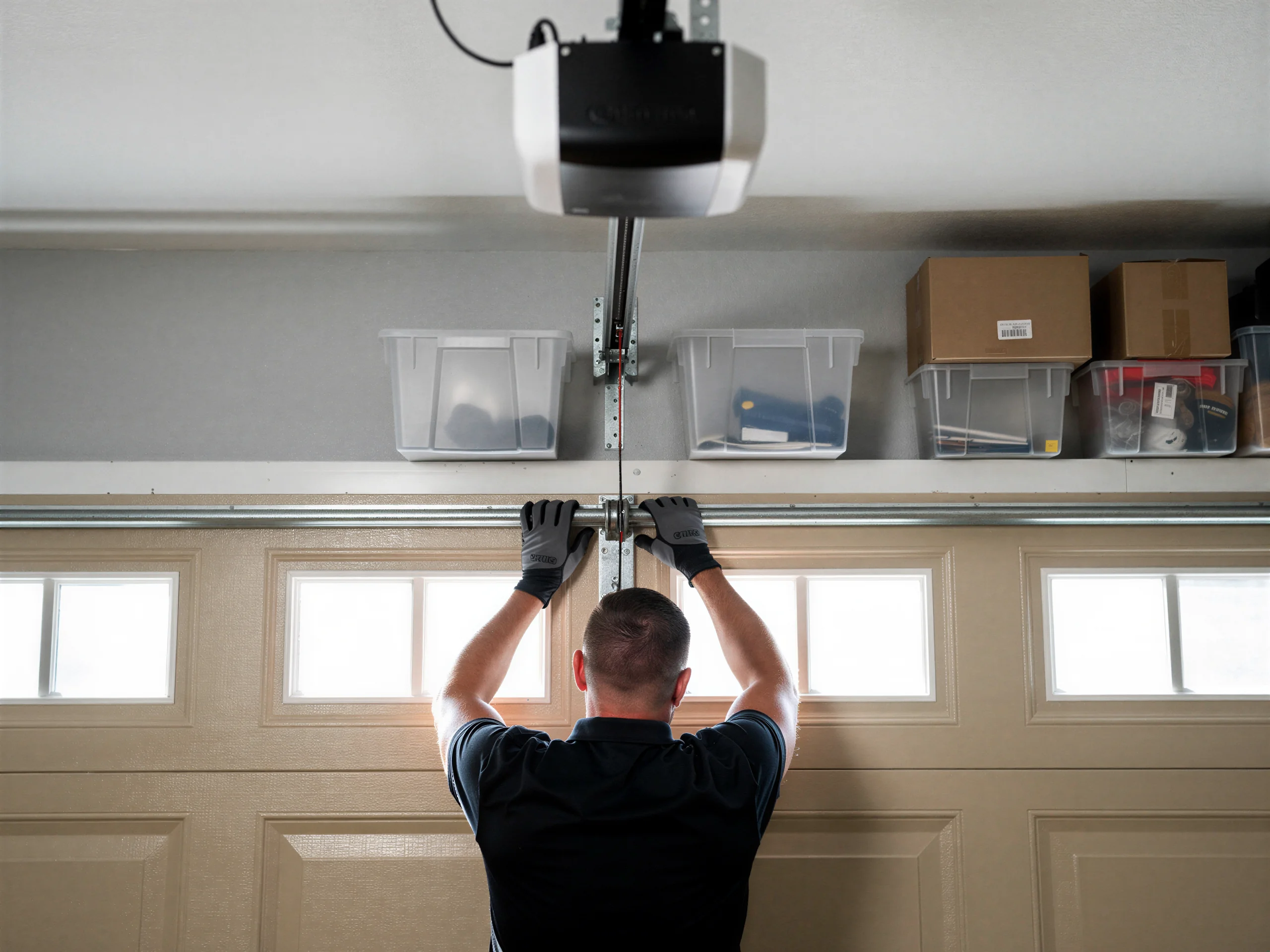
Cables are under constant tension from the spring system, and a cable job almost always means the door is partially or fully unsecured while you work.
Cable work stays professional
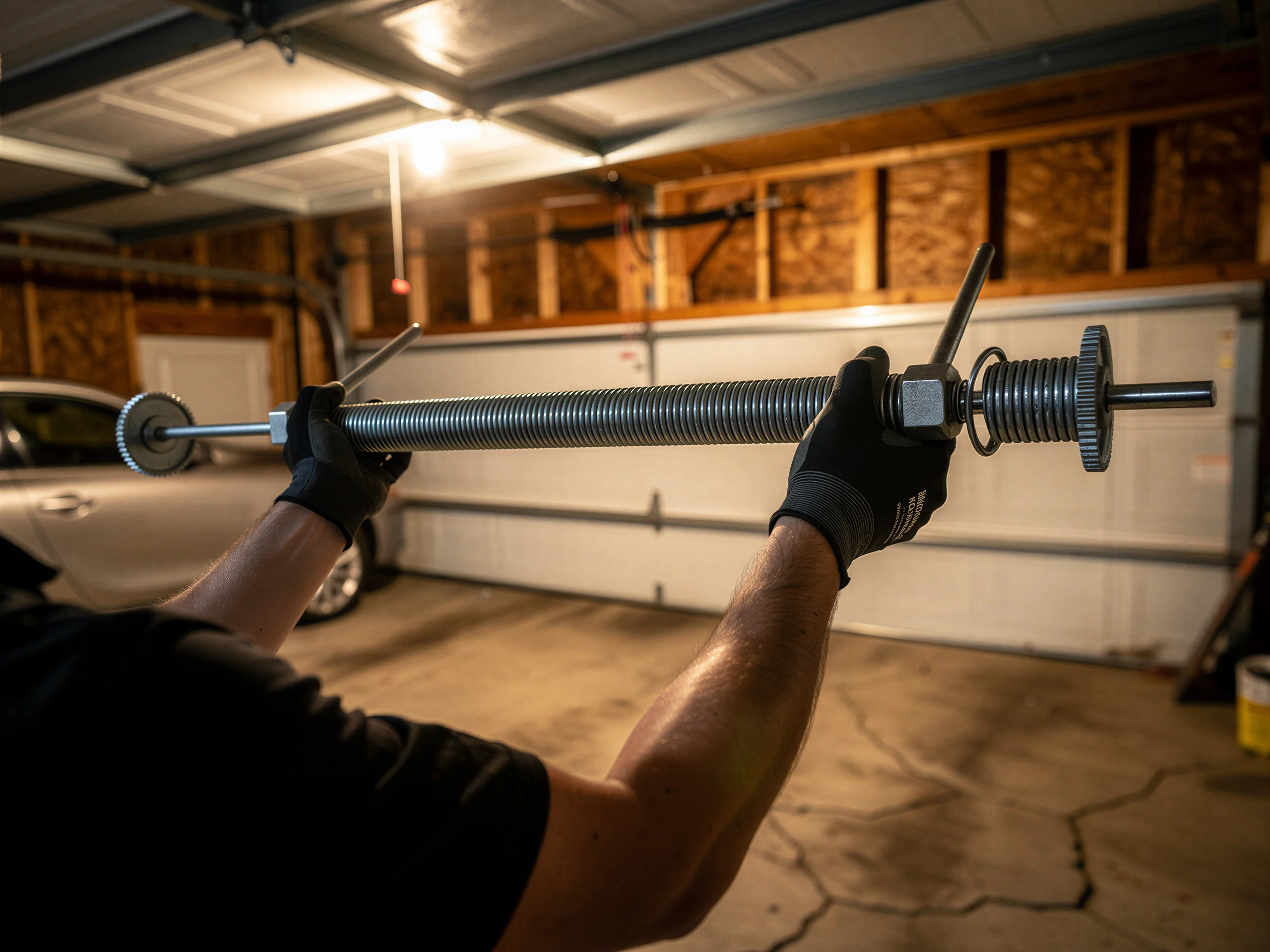
This is one of the few repairs we tell people flat out not to attempt themselves - not because the mechanics are complicated, but because a cable or spring letting go under load can break fingers or worse. We've been asked plenty of times whether a come-along and a YouTube video is enough.
Safe visual checks
It isn't. What you can safely check yourself: look at the bottom brackets for visible fraying, check whether the cable sits properly in the drum groove, and note whether the door is sagging on one side versus hanging level.
Leave failed cables alone
That tells us what we're walking into before we get there. Don't try to re-tension or re-seat the cable yourself, and don't cut a cable that's already partially snapped to 'finish the job' - leave it exactly as it failed.
What You Pay
We don't have a posted price list for cable repair here, because the job varies too much by hardware: a single frayed cable on a standard torsion system is a different job than a full cable-and-drum replacement on an older extension setup, and we're not going to quote a number before we've seen which one you have. What we can tell you is that cable repair on its own, without a spring replacement alongside it, is one of the more affordable calls we run - but if your spring is also near the end of its life, we'll say so rather than send a cable guy back out again in six months.
That's the honest limit here: we can't give you a firm number over the phone for this one, because cable jobs hide their real scope until the panel's off and the drum's exposed.
Talk to a local pro
Garage door service in Georgetown?
Same-day service with honest, upfront quotes.