The Symptom
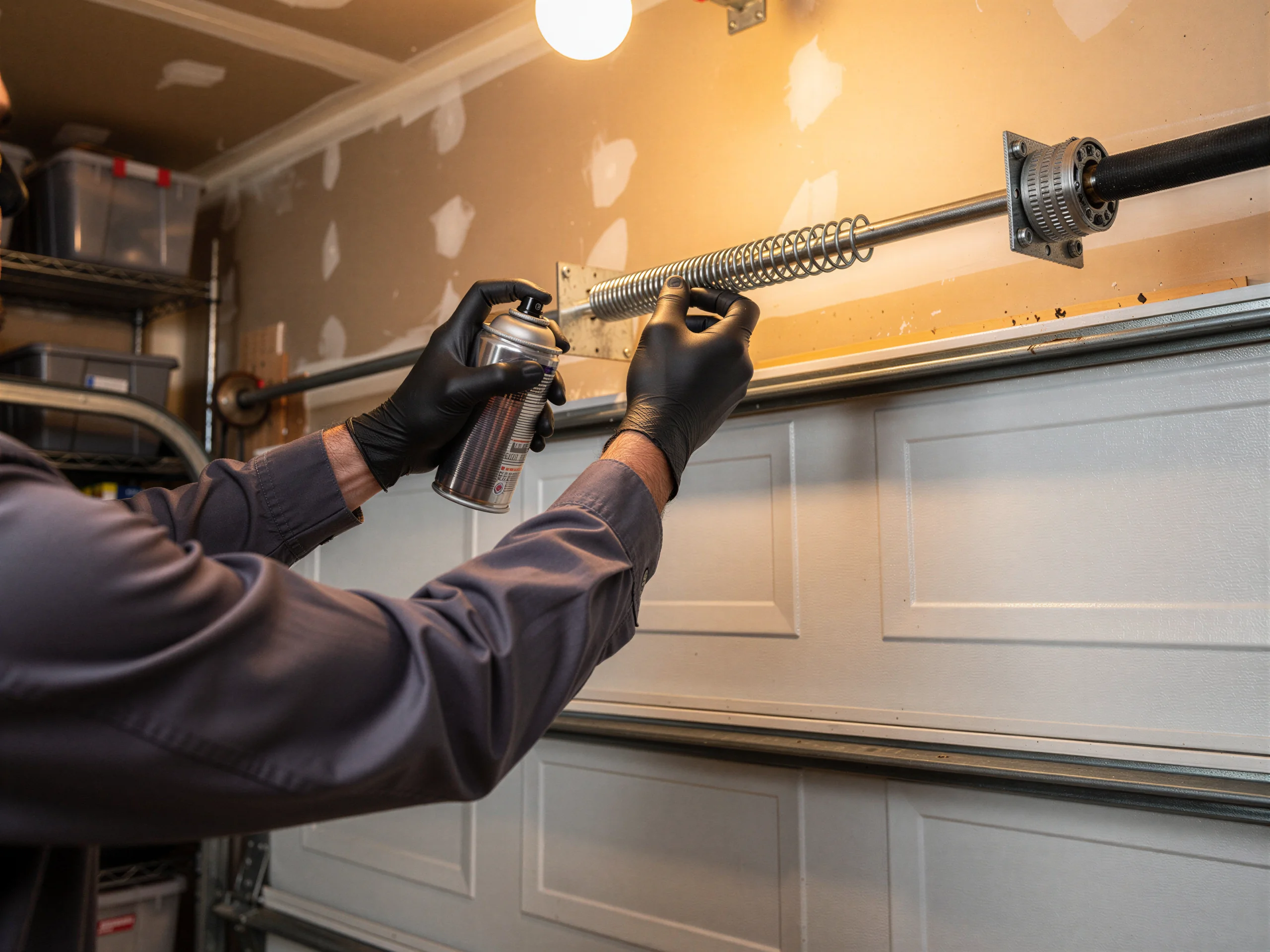
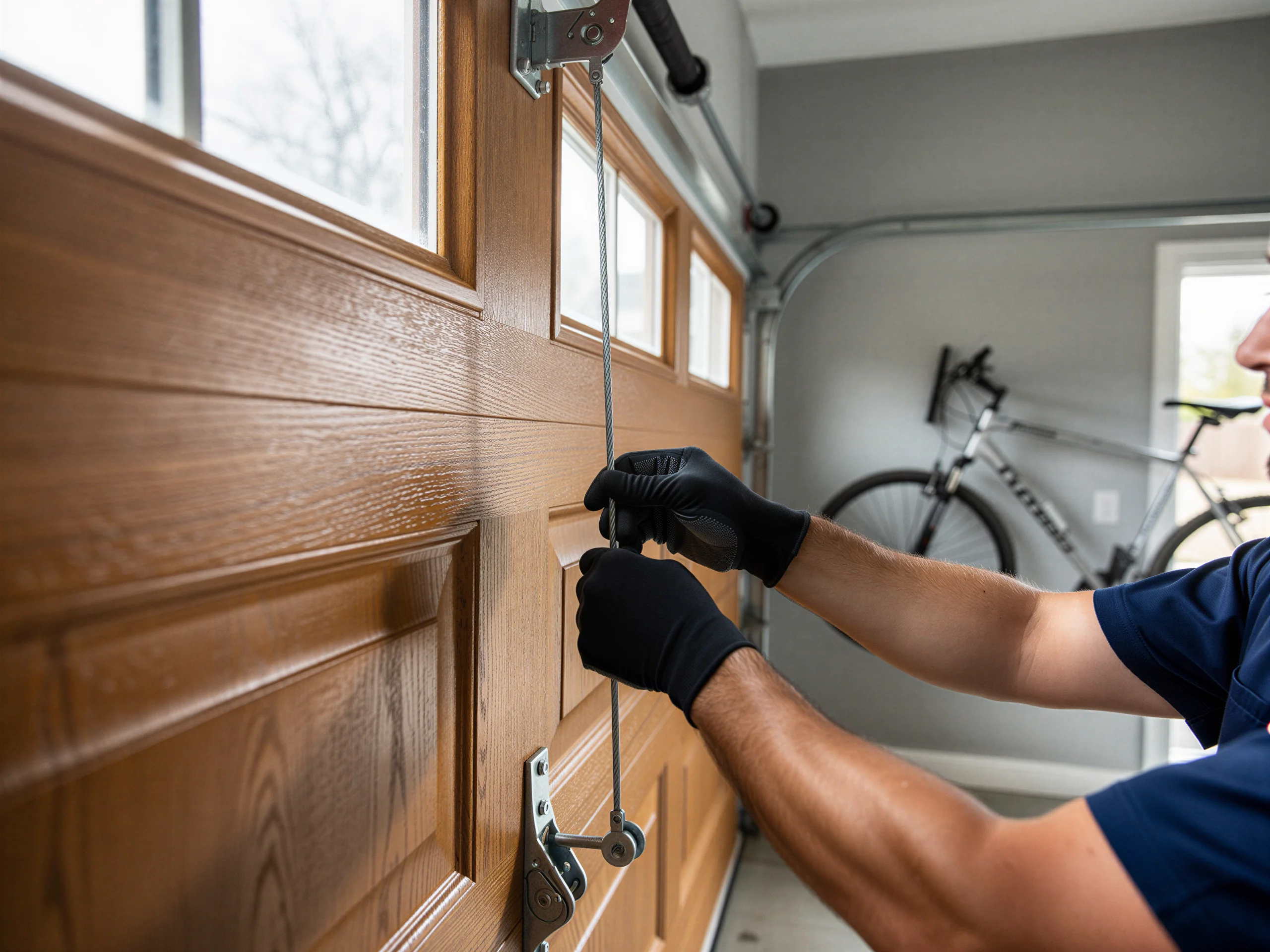
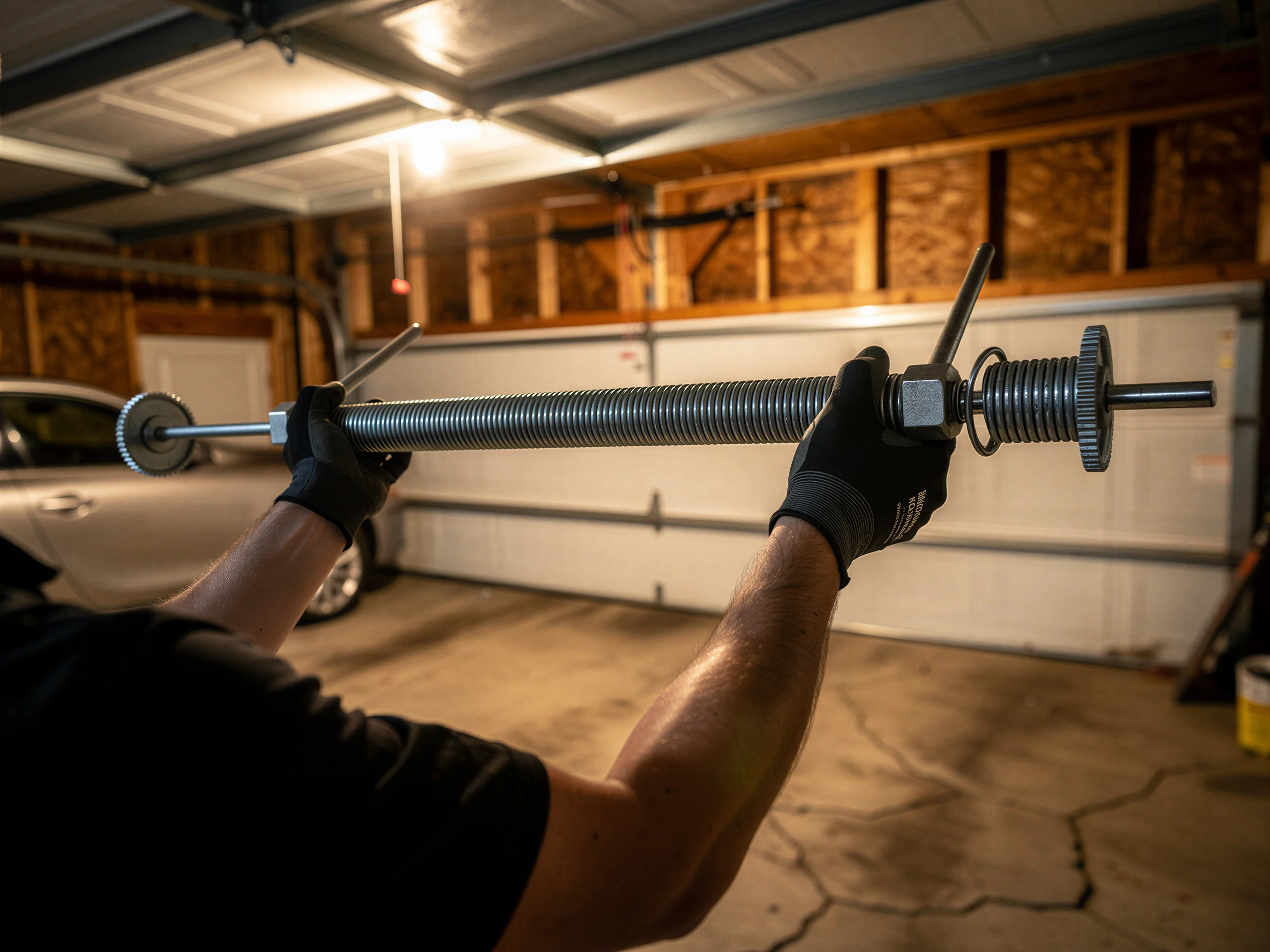
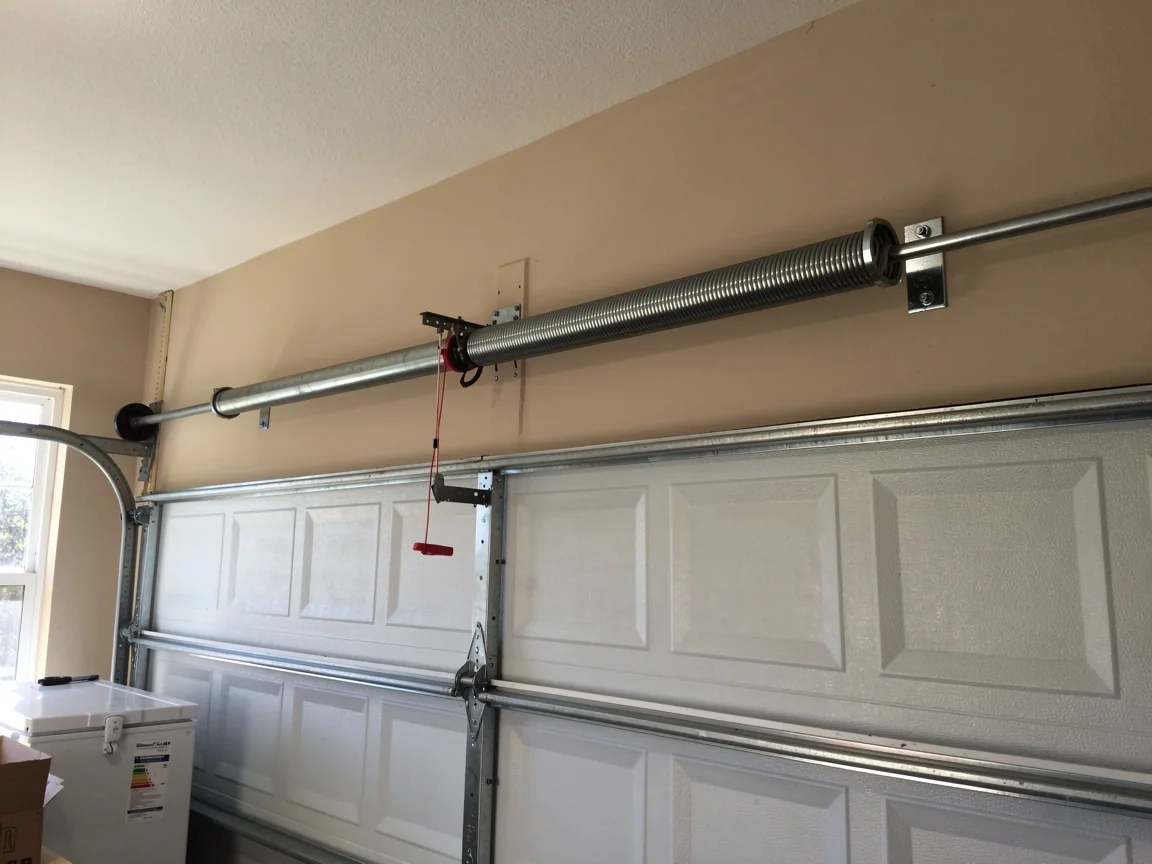
The door won't budge, or it moves a few inches and stops. You hear a bang from the garage at some point - that's the spring letting go, usually a torsion spring mounted above the door on a metal shaft.
Quiet single-spring failure
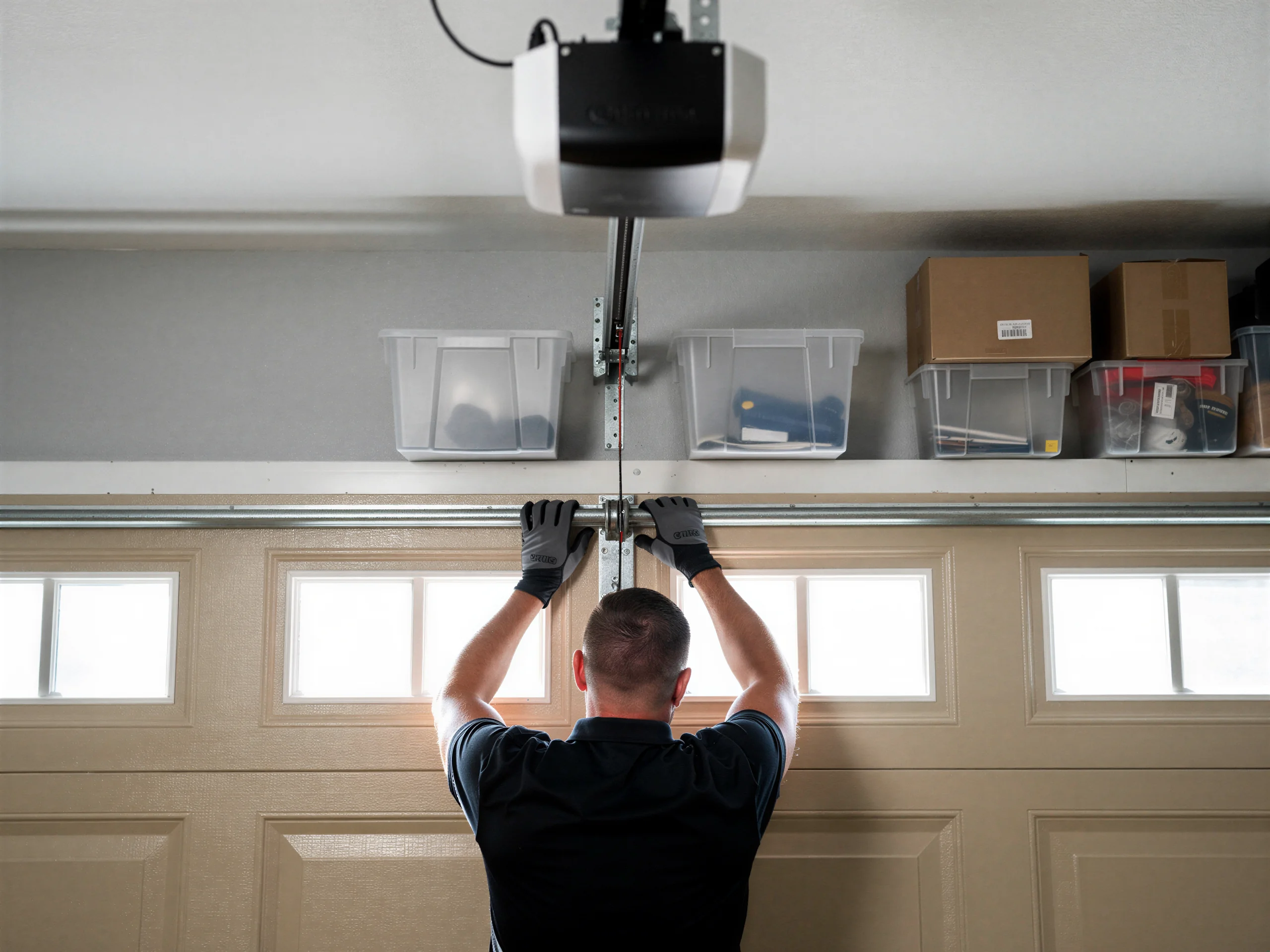
Sometimes it's quieter: the opener strains, the chain skips, or the door comes down crooked on one side because one of the two springs is still holding and the other isn't. If you pull the release cord and the door feels like it weighs four hundred pounds, that's a spring problem, not a track or opener problem.
Door won't hold position
A door that reverses right after it starts closing, or one that won't stay up when you lift it by hand, is telling you the spring is no longer carrying its share of the weight.
Matched pair replacement
None of these are openers failing - they're springs that have worn through their cycle life and need to be swapped, matched in pairs, and wound to the right tension for your door's weight.
Why This Fails Locally
A lot of the housing across this service area was built between 1957 and 2018, with the median sitting around 1993, and most of the stock in the ten communities we cover clusters in that 1980s-90s build wave. That matters because torsion springs are rated in cycles, not years, and a spring installed when the house went up is now old enough that it's either near the end of its life or past it. Add the climate: this part of Texas runs mild most of the year but still gets real freeze snaps in winter, and that swing from a hot afternoon to a hard overnight freeze is harder on steel than steady weather in either direction. The metal expands and contracts, the coil tension shifts slightly each time, and that accelerates fatigue in a spring that's already logged tens of thousands of open-close cycles. Houses from that same build era also tend to have the same gauge of spring the builder spec'd at the time - often undersized for a few decades of upgrades like insulated doors or added storage weight on the door itself.
The DIY Question
Straight answer: don't replace the spring yourself. A wound torsion spring holds enough stored energy to break a bone or worse if the winding bars slip, and extension springs without safety cables can launch across a garage. This isn't a job where a mistake just means doing it over - it's a job where a mistake means a trip to the ER. What you can do yourself: check whether both springs look even in coil spacing, listen for the bang that tells you which one let go, and confirm the opener itself isn't the real issue by pulling the manual release and testing the door by hand (carefully, with help, never alone under a loaded spring). If the door is heavy to lift by hand, stop there and call. That's the one limitation worth saying plainly - we don't talk people through spring jobs over the phone, and we won't sell you a DIY kit for this one.
What You Pay
Spring jobs price out based on a few things: whether you've got one torsion spring or two, the spring's wire size and wind (which depends on door weight and size), and whether the drums, cables, or bearings also need replacing because they've worn alongside the spring.
Heavier panel wear
A double garage door usually runs two springs rather than one, and if your door was upgraded to a heavier insulated panel at some point without the spring being re-rated, that's extra wear nobody budgeted for.
On-site spring sizing
We quote the job after seeing the door and spring size in person rather than guessing over the phone, since a wrong guess either overcharges you or sends a tech out with the wrong part.
Drums and cables flagged
If your springs are original to a house from the 1980s or 90s, expect the tech to flag the drums and cables for a look too - they're usually due around the same time.
Talk to a local pro
Garage door service in Georgetown?
Same-day service with honest, upfront quotes.