The Symptom
The door groans, hangs at an angle, or won't budge past the first six inches. Sometimes it's a loud bang from the garage followed by the door refusing to open at all - that's almost always a torsion spring letting go.
Door drops fast
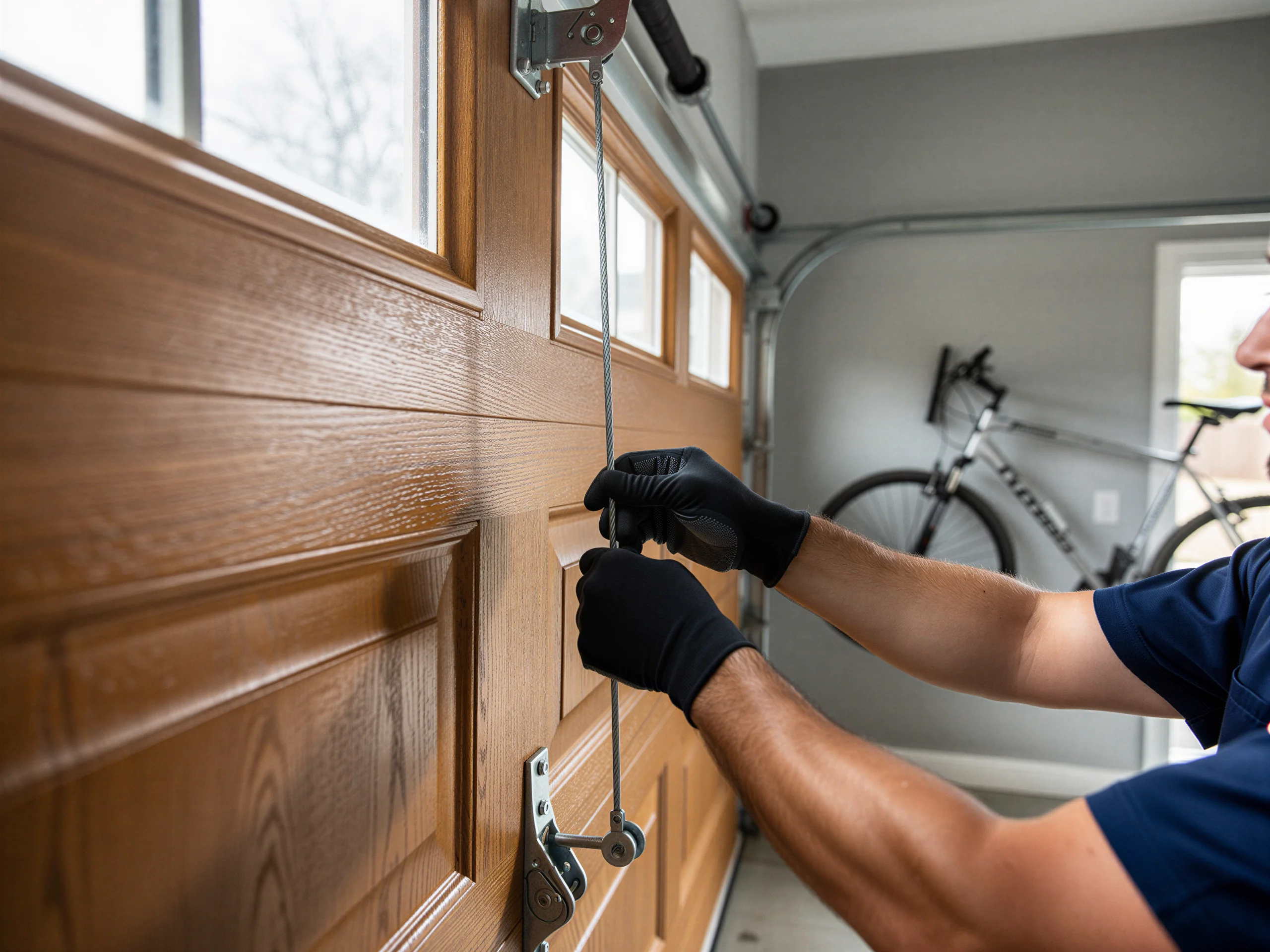
Other times the opener motor runs but the door just sits there, which points to a stripped gear or a cable that's walked off its drum. If the door drops fast on the way down instead of lowering on its own weight, you're looking at a broken spring, full stop, and that's not a job to push through by hand.
Loose rollers and bolts
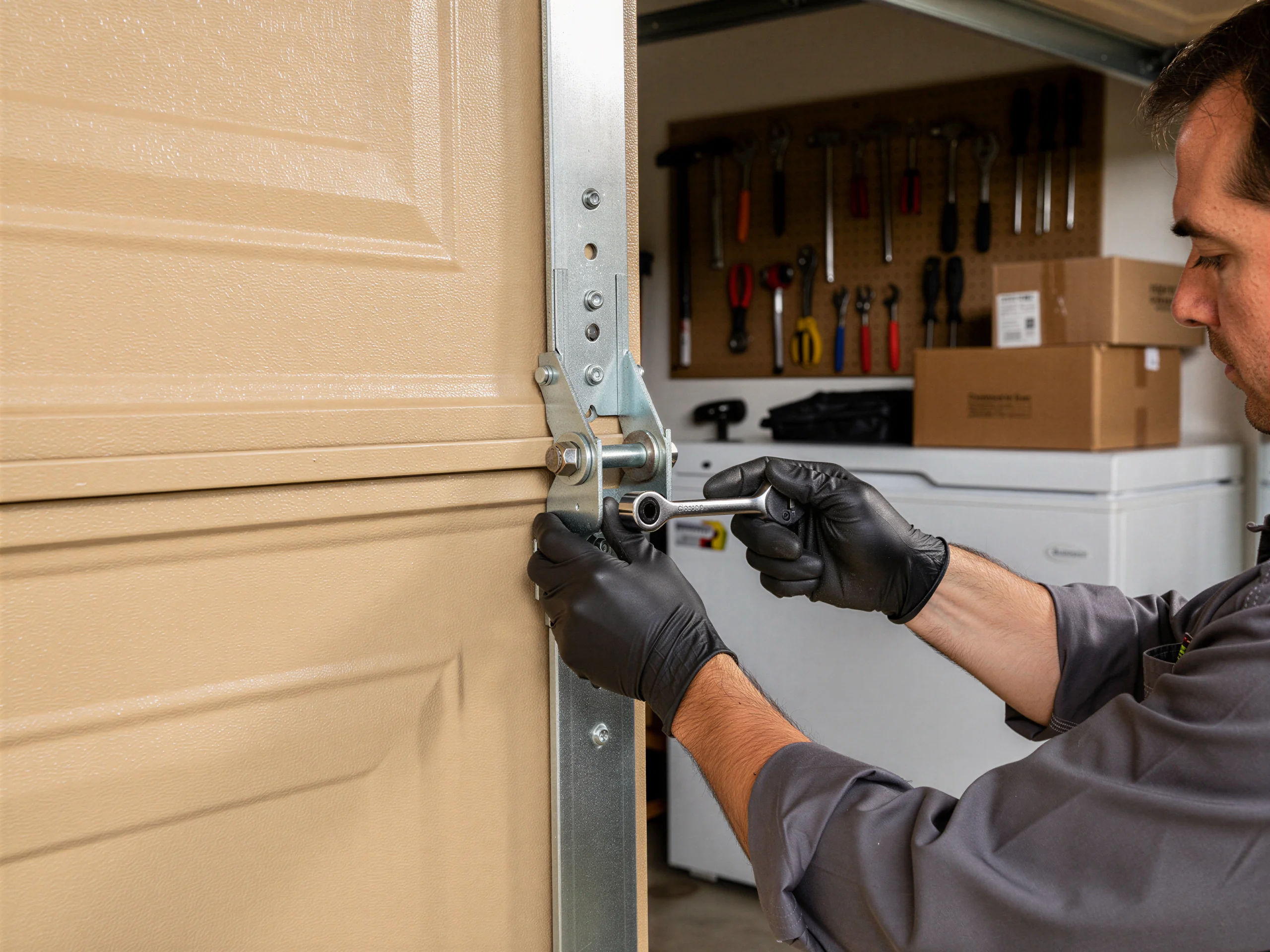
A rattling track or a door that sticks on one side more than the other usually means the rollers or the track bolts have worked loose over the years - normal wear, not a defect.
Symptoms versus root causes
We see all of these on doors that otherwise look fine from the driveway. The symptom tells you something broke; it doesn't tell you what's underneath, and guessing wrong on a torsion system is how people get hurt.
Why This Fails Locally
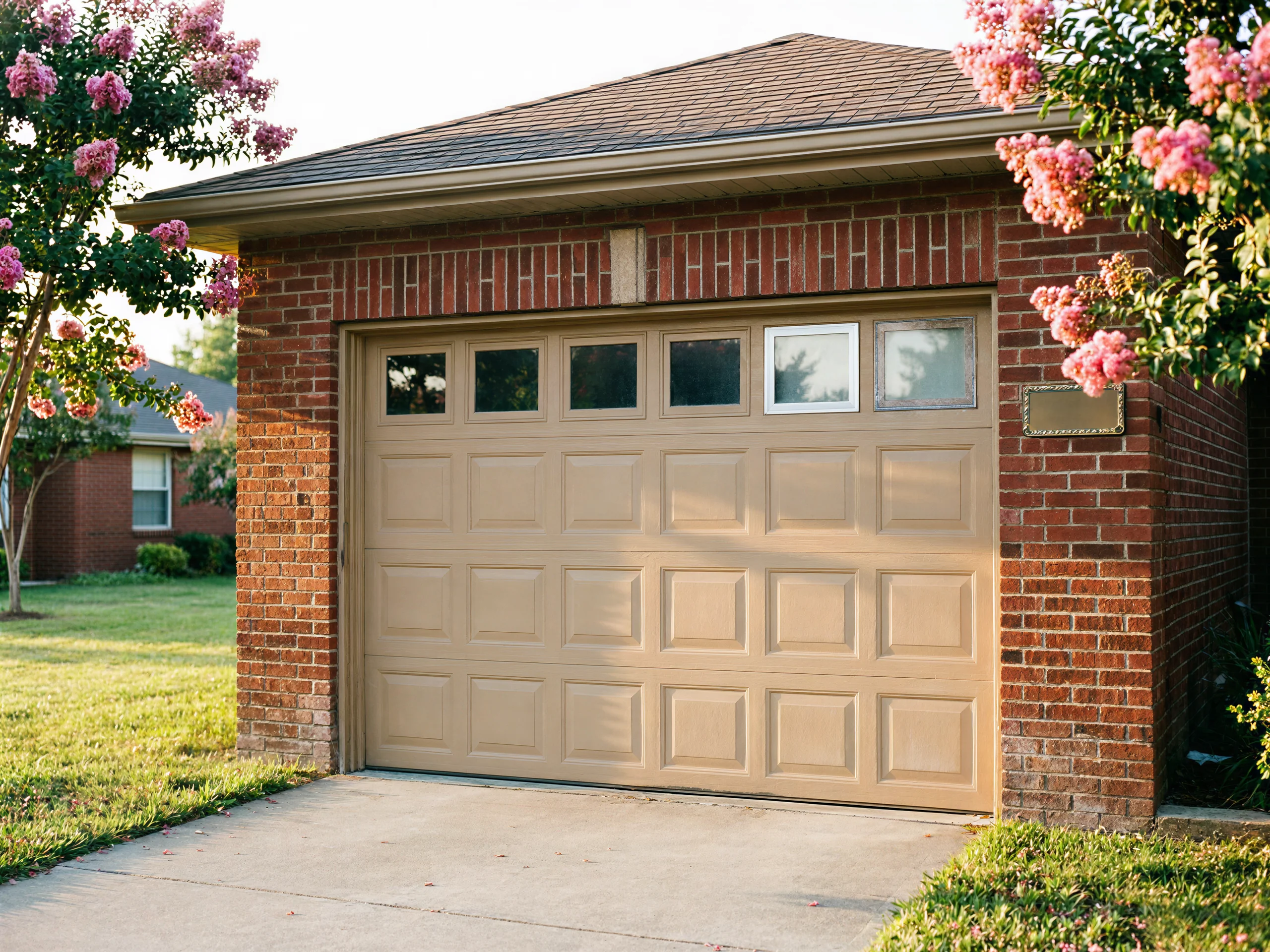
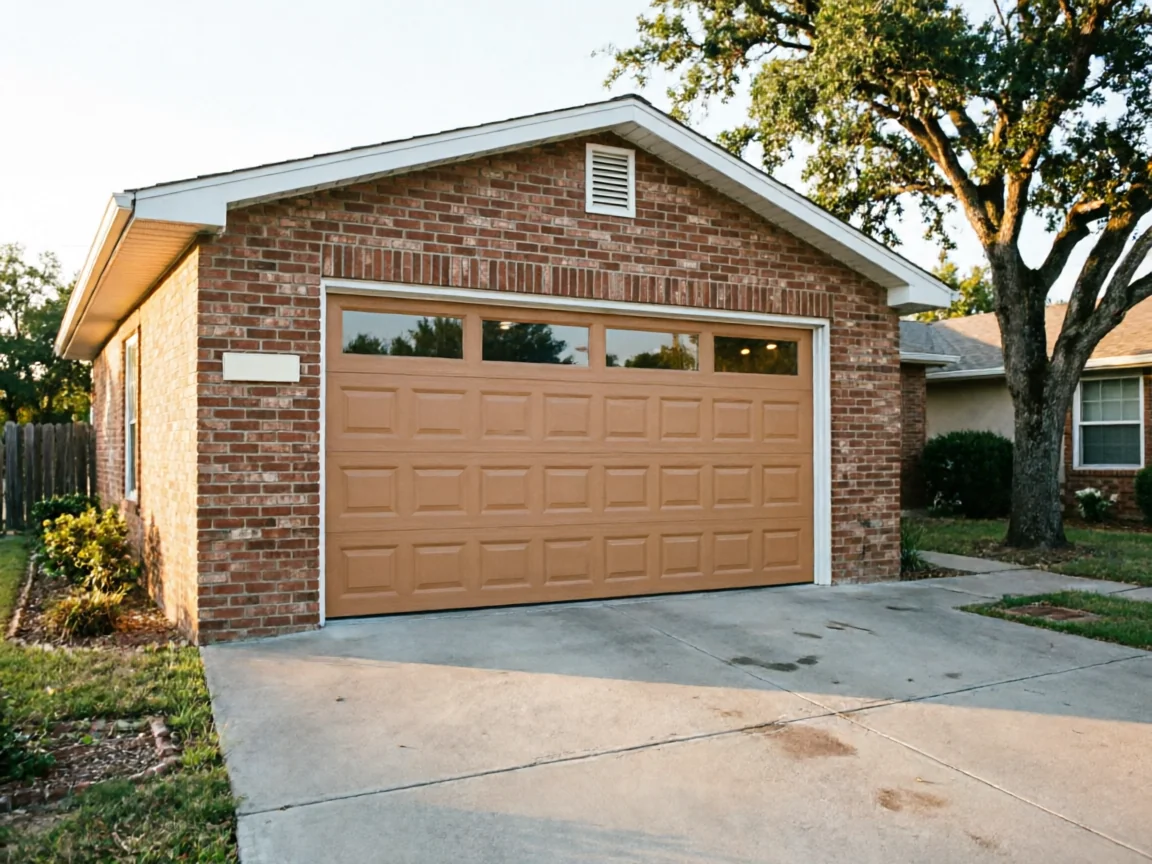
Housing in this area was built anywhere from 1957 to 2018, but the median year is 1993, and most of it clusters in that 1980s-and-90s builder wave across the ten named communities we work in. That matters because torsion springs have a rated cycle life, and a spring installed when a house went up in the late 80s or early 90s is well past due for failure now - it's not bad luck, it's the math catching up.
Georgetown's climate is mild with occasional freezes, not the deep-freeze cycles that crack steel outright, but that swing between warm humid stretches and the odd cold snap still does damage over three decades. Galvanized coating on an original spring or track wears thin, rust sets into the coil, and a spring that might have lasted another few years in a drier, steadier climate gives out early. Openers from that same building era are also reaching the end of their motor life, which is why spring failure and opener failure often show up as the same service call on a house built in this window.
The DIY Question
Some of this you can check yourself. Look at the track bolts and tighten anything loose. Vacuum the photo-eye sensors if the door reverses for no reason.
Note the noise source
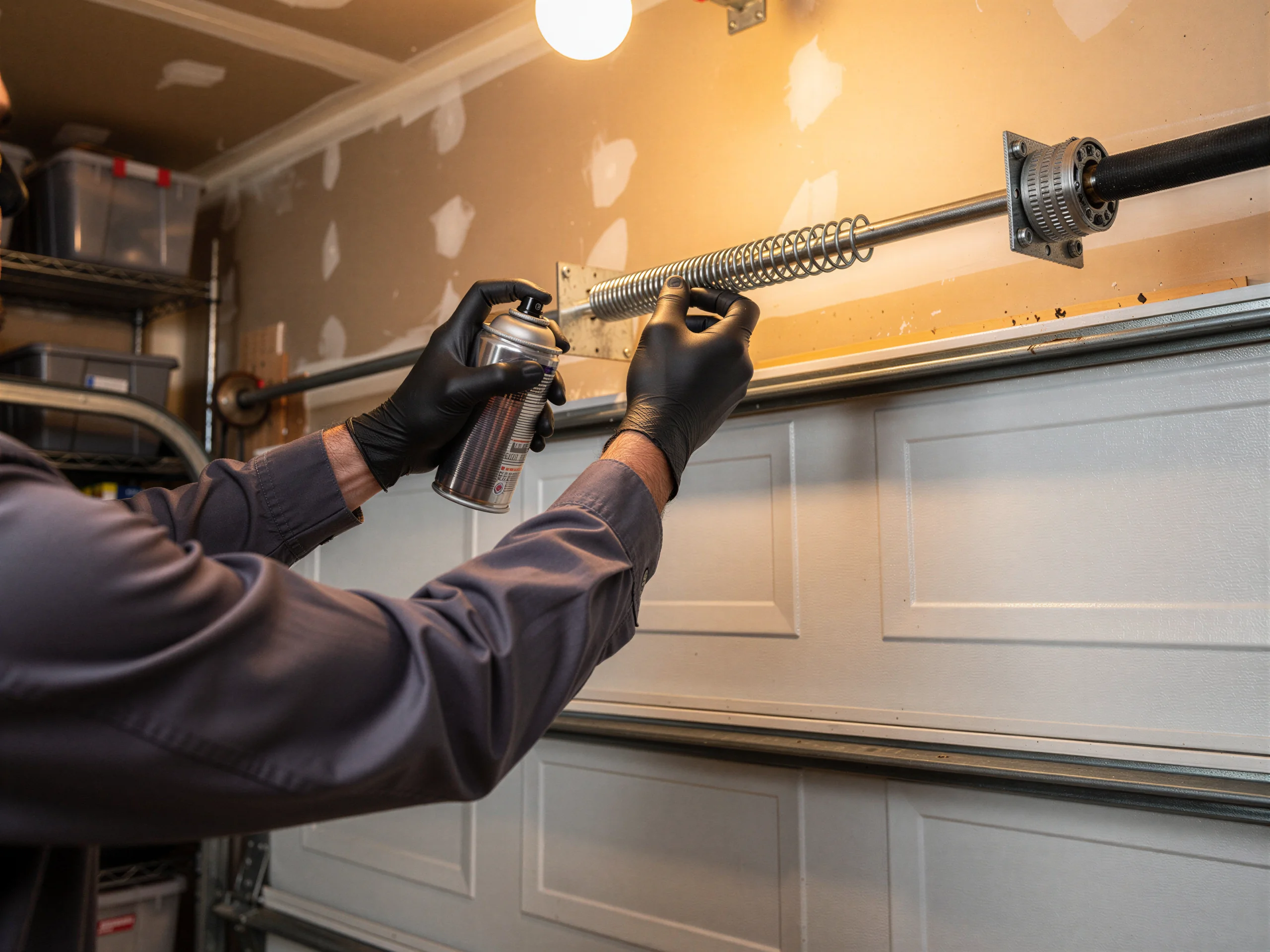
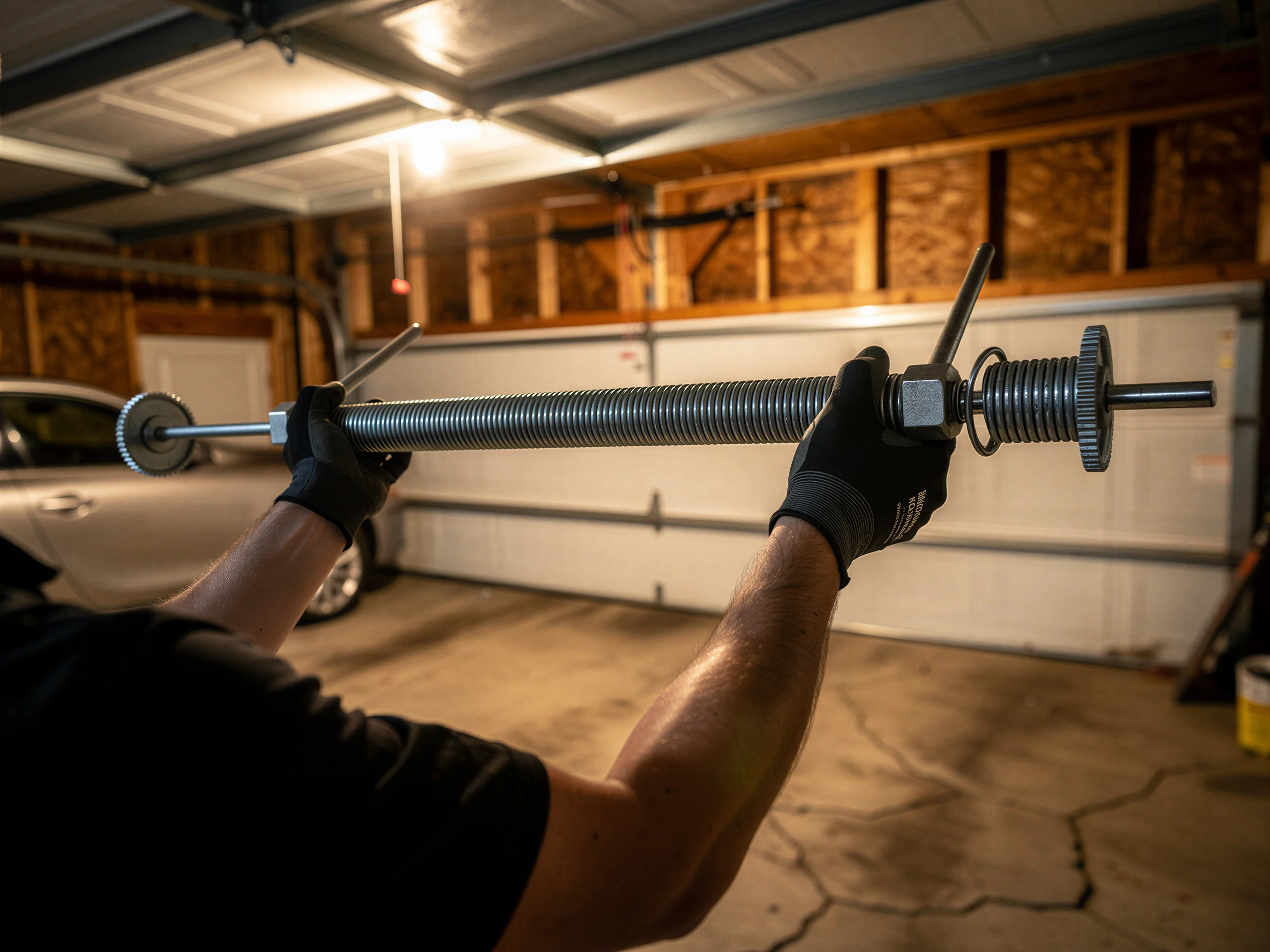
Listen for where the noise is coming from before you call anyone - that alone saves a wasted trip. A torsion spring is not a DIY repair. It's wound under enough tension to break bones if the winding bars slip, and the tools for it aren't something most garages have lying around.
Dropped door risks
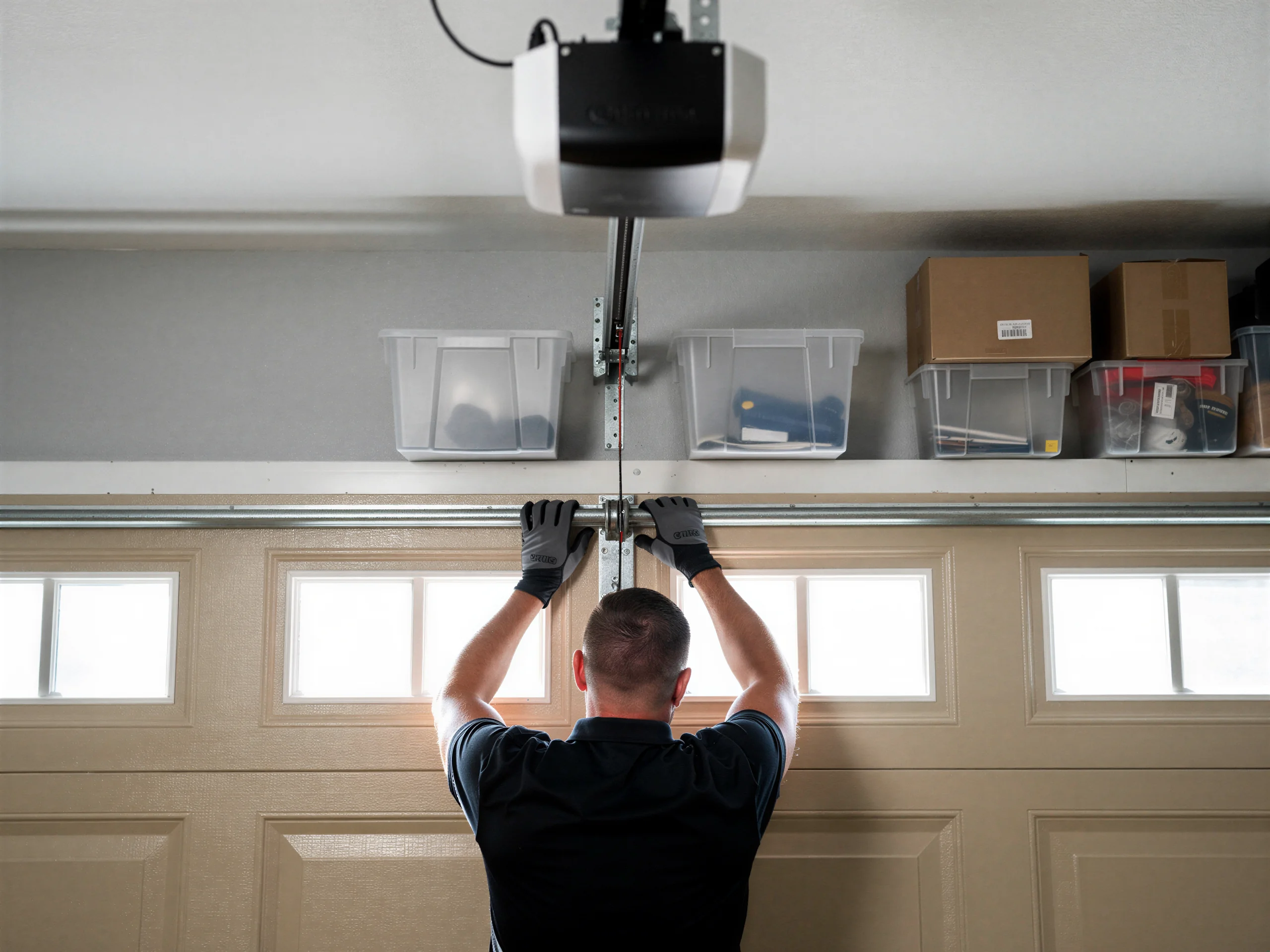
Same goes for cable replacement on a door that's already dropped - the door is dead weight at that point and it doesn't move safely without the right jacks and clamps.
Logic board swaps
If your opener is original to a house built in the 80s or 90s, swapping the logic board yourself usually isn't worth it either; the part is often harder to source than the labor to replace the whole unit. Know the limit and call past it - that's cheaper than a second repair on top of the first.
What You Pay
We don't have a flat number to quote here because the range depends on what actually broke and how old the hardware is. A single spring on a lighter door costs less than a matched pair on a heavier insulated door, and a cable or roller swap is a different job entirely from a full opener replacement.
What we can tell you is what drives the range up: doors and openers original to the 1980s-90s builder stock that makes up most of this area often need full-unit replacement rather than a patch, because parts for openers that old are no longer stocked. Median household income across the area we serve runs $99,368, and most owners in that bracket choose to replace a worn-out opener outright rather than keep nursing a unit that's going to need another call in a year. Ask for the number up front on your specific door - we'll look at what's actually failed before we talk price, not after.
Talk to a local pro
Garage door service in Georgetown?
Same-day service with honest, upfront quotes.