The Symptom
You back out of the garage and catch the corner wrong, or a hailstorm leaves a crease across one section, or you just notice a panel bowing out near the bottom where the weatherstrip sits. Maybe it's one dented panel on an otherwise fine door, or the whole bottom section has rusted through at the seams. Either way the door still opens - that's the trap. A door can run on a cracked or buckled panel for months before the track finally fights back, binding the rollers or putting a visible twist in the whole section. If you're searching for panel replacement specifically, you've probably already ruled out a full door swap and just want the damaged section fixed. That's often the right call, and often it isn't - it depends on the door underneath the panel.
Why This Fails Locally
Housing across the Georgetown service area runs from 1957 up to 2018, with most of it built in the 1980s and 1990s across the ten-plus named communities we work in. That matters for panels because doors from that era were mostly steel sandwich panels on steel tracks, and after 25-35 years the galvanized coating at the bottom seam is usually the first thing to go - that's where rust starts, not in the middle of a panel. The climate band here is mild with occasional freeze, so you're not fighting the kind of deep freeze-thaw cycling that cracks panels in colder states, but you do get enough temperature swing and sun exposure to warp thinner aluminum panels over a couple of decades, especially on south and west-facing garages. A dented panel on a 1990s steel door is usually a straightforward swap. A dented panel on an older door where that panel style was discontinued is a different conversation, and sometimes the honest answer is that the whole door needs replacing instead.
The DIY Question
Panel kits are sold online and at some box stores, and if you're mechanically confident and the door is a common size, swapping a single panel without touching the spring or cable system is within reach for some homeowners.
Panel profile mismatches
The catch is matching the panel - door manufacturers change panel profiles, insulation types, and hinge spacing over the years, and a door built sometime in that 1957-2018 range in this area may not have an exact match available anymore. Order the wrong profile and you've got a panel that doesn't sit flush, which throws off the whole door's balance.
Load-bearing bottom bracket
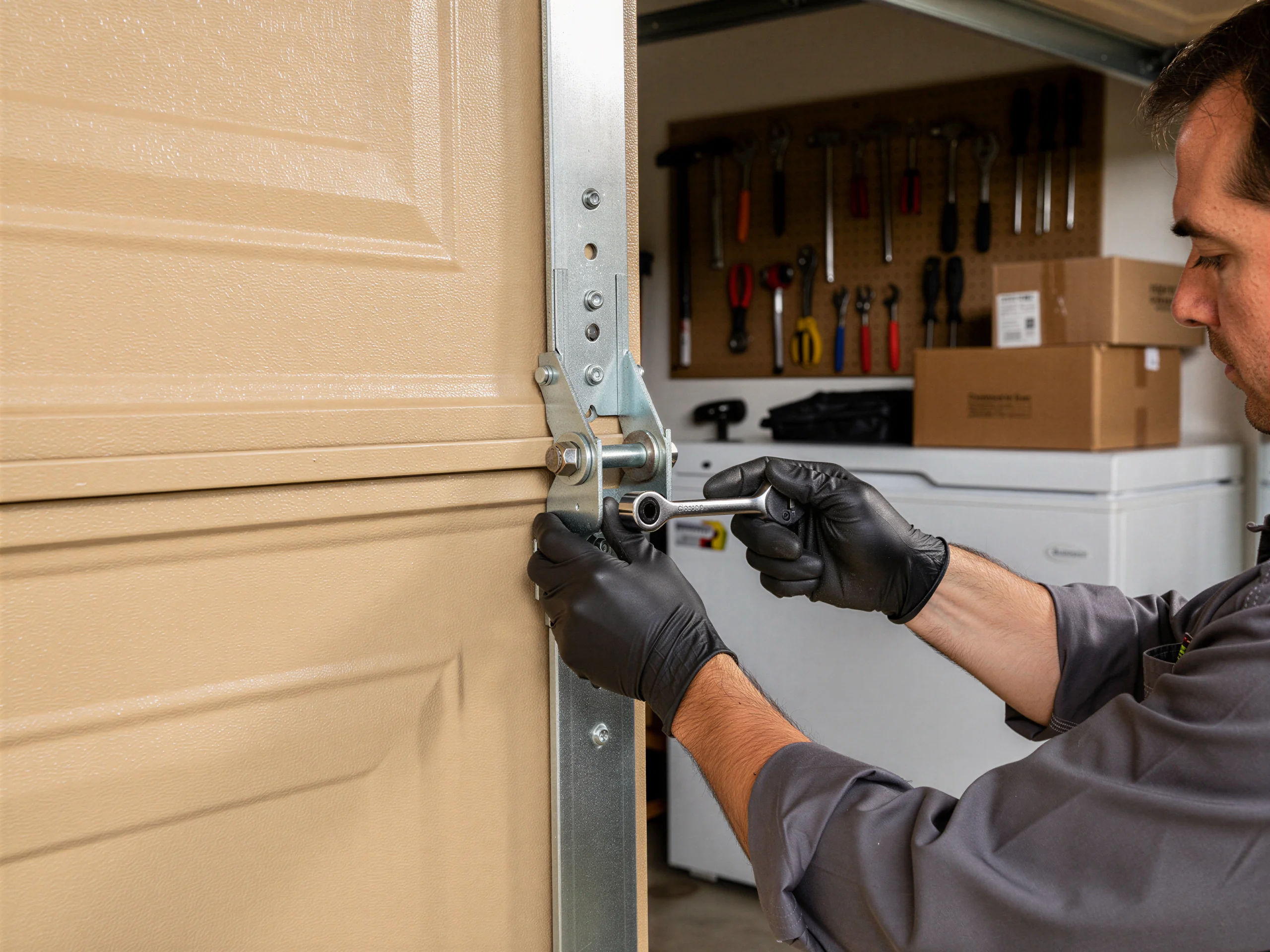
There's also real risk if the panel you're replacing is load-bearing near the bottom bracket, where the cables attach - that's not a place to guess. We'll tell you straight if a job is a genuine DIY candidate or if the hardware underneath makes that a bad idea.
What You Pay
We don't have a flat number to put on the page because panel replacement cost depends on too many specific things: whether your panel is a common stock size or has to be special-ordered, whether it's steel or aluminum, insulated or not, and whether the track or hinges took damage along with the panel. A single stock panel on a common 1990s steel door is a different job from a custom panel on an older or unusual door. What we can tell you is that across the households we serve - roughly 26,000 owner-occupied houses in a service area with median household income near $99,000 - most panel jobs land somewhere between a simple swap and a conversation about whether replacing the whole door makes more sense. We'll give you a real number once we've seen the door and matched the panel, not before.
Talk to a local pro
Garage door service in Georgetown?
Same-day service with honest, upfront quotes.