 What That Sound Is Actually Telling You
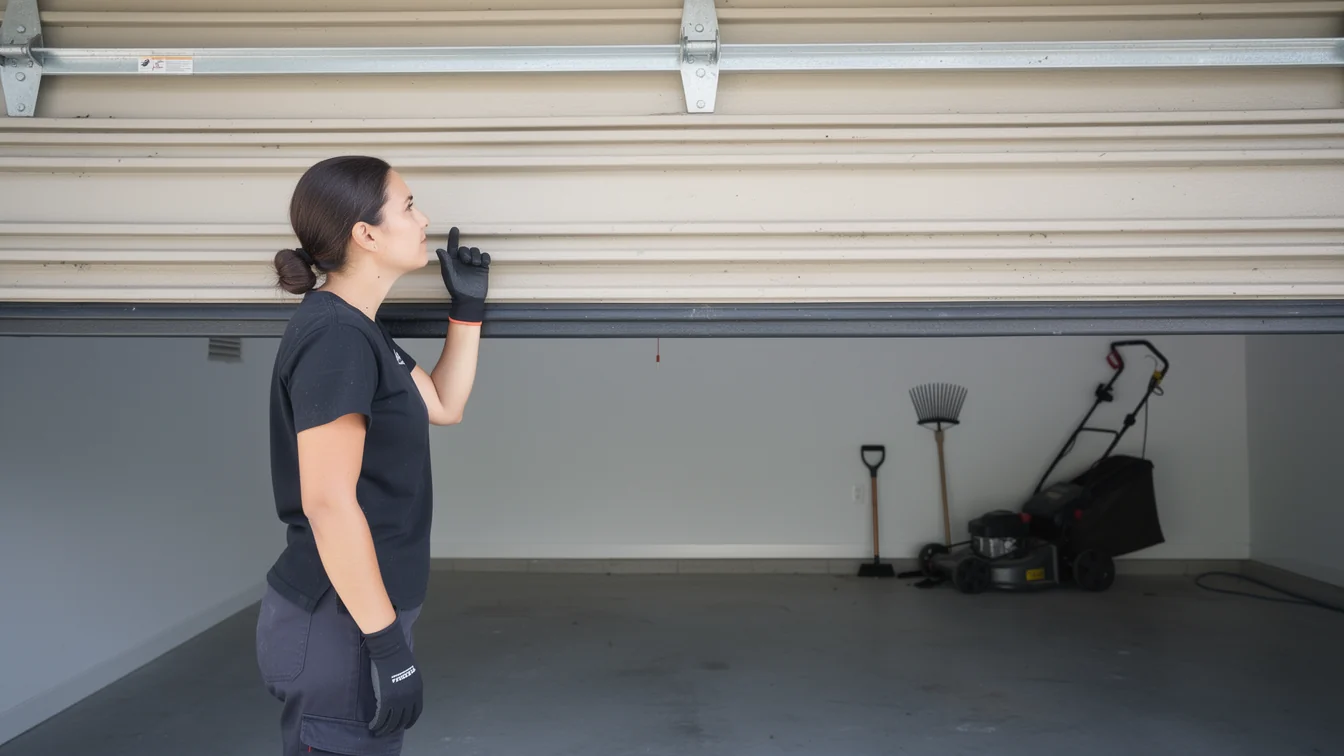
Georgetown homes built between 1957 and 2018 carry different hardware, and that age gap plus the mild-with-freeze climate changes what a grinding or popping door is actually telling you.
When the Power Drops, What Does Your Georgetown Garage Door Actually Do
Georgetown homes built mostly 1980s-2018 run openers that behave differently in a power cut. Here's what your garage door does when the grid drops, and why.
Local detail
The Situation
Georgetown's housing stock runs from 1957 up through 2018, with the median build year sitting at 1993 and most of the ten named areas we work in dating to the 1980s and 90s build-out. That matters for openers because a unit installed when a house was built in, say, 1991 is not the unit you'd see going in today. Chain-drive units from that era were not built with battery backup as standard, and a lot of them are still running on original motors because the drivetrain outlasts the logic board. When the power cuts, that opener just stops wherever the door was in its travel. No backup, no soft landing, no override signal. If the door was halfway up when the lights went out, it stays halfway up until someone pulls the manual release cord and muscles it the rest of the way by hand. Newer installs, especially anything put in within the last decade, are far more likely to have battery backup built in, which changes the whole conversation. The point is: the age of your opener, not the age of the house, decides what happens in an outage, and in a city where 1980s and 90s stock is still common, a lot of openers here predate that feature entirely.
The area
How Local Conditions Play In
Georgetown sits in a mild climate band with occasional freeze events, not the deep-freeze territory further north and not the hurricane corridor on the coast. That combination means outages here are more likely to come from an ice event on the lines during one of those occasional freezes than from sustained storm damage. A short, hard freeze that knocks out power for a few hours is a different problem than a multi-day outage - it means most households deal with the opener issue once, briefly, rather than needing a long-term backup strategy. It also means the manual release cord gets used rarely, which is exactly why people forget where it is or forget it needs occasional lubrication to pull smoothly. A release that's seized from disuse is its own kind of surprise during a cold-snap outage, on top of the power already being out.
What we find
Doing Nothing For Now
If your opener is original to a house built in the 1980s or 90s, doing nothing is a reasonable short-term call as long as you know where the release cord is and that it actually pulls free. We're not going to tell you every older opener needs replacing - plenty of those chain-drive units are mechanically sound and will keep running for years. The honest limitation here: we don't carry battery backup retrofit kits for every discontinued opener model, so on some of the oldest units the choice really is full opener replacement if backup power matters to you, not a bolt-on add. For a lot of households, given how short our freeze-driven outages tend to run, that tradeoff isn't worth making yet.
How we work
The Common Mistake
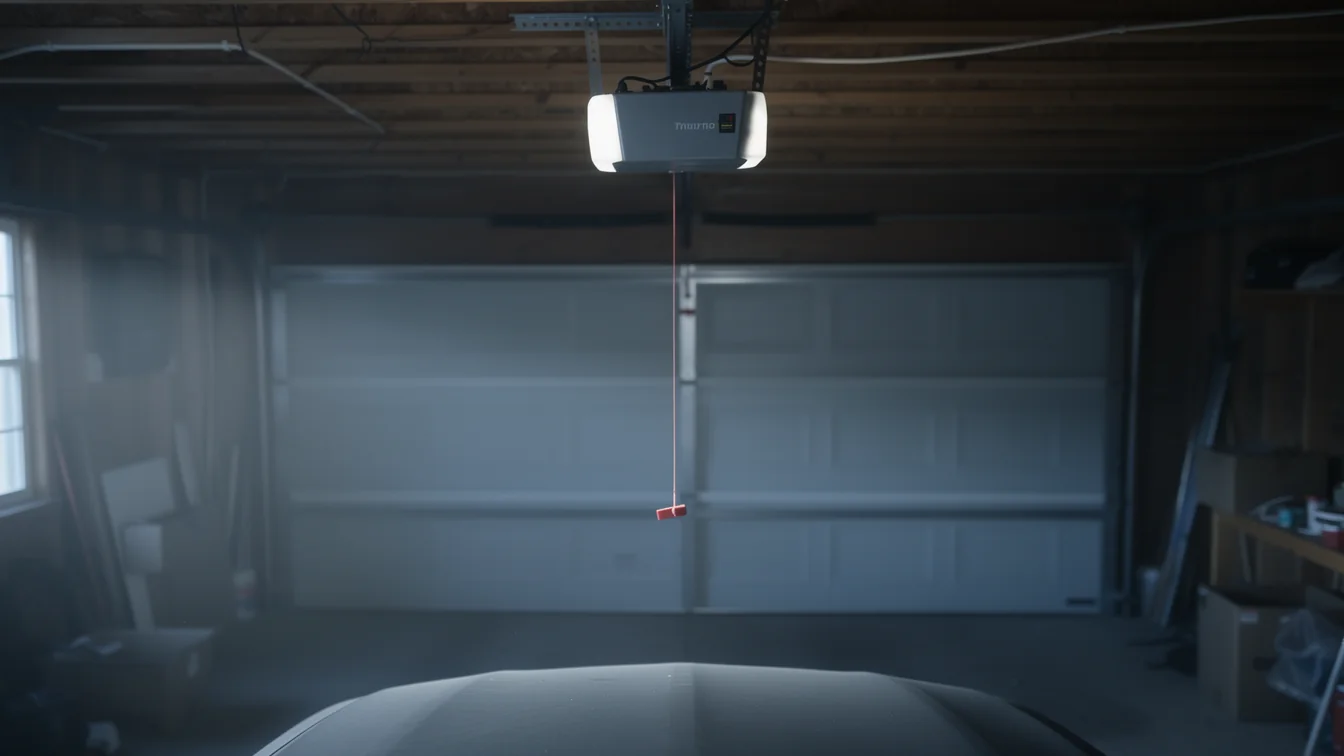
The mistake we see most in Georgetown is someone forcing the door with the opener still engaged during an outage - trying to lift it by hand without pulling the release first, or pulling the release but leaving the opener's trolley jammed against the track. On a chain-drive unit from the 1980s-90s stock that's common across this area, that kind of forcing bends the trolley arm or strips the plastic gear inside the housing, turning a five-minute manual lift into an opener replacement. The fix takes ten seconds: find the red release cord, pull it down and back, then lift the door by hand. Do that before anything else when the power's out.
Questions
Common questions
Will my garage door opener work during a power cut in Georgetown?
Only if it has battery backup. Openers installed new in roughly the last decade often include it; units original to houses built in the 1980s or 90s typically don't. If you're not sure which you have, check the housing for a battery compartment near the motor unit.
How do I open the garage door manually when the power is out?
Pull the red release cord hanging from the trolley rail toward the back of the opener. This disconnects the door from the opener carriage so you can lift it by hand. Make sure the door is fully closed first if possible, since an unsupported door mid-track can drop.
Should I upgrade my opener just for outage protection?
Given how short most freeze-driven outages run here, it's not a must for everyone. If your current opener is older and discontinued, we may not have a battery backup kit that fits it, so the real choice is full replacement. Worth discussing before you decide either way.
Recommendation
You Might Also Like
More garage door guides for Georgetown homeowners.
What That Sound Is Actually Telling You
Georgetown homes built between 1957 and 2018 carry different hardware, and that age gap plus the mild-with-freeze climate changes what a grinding or popping door is actually telling you.
 What's Actually Included When You Call for Garage Door Service
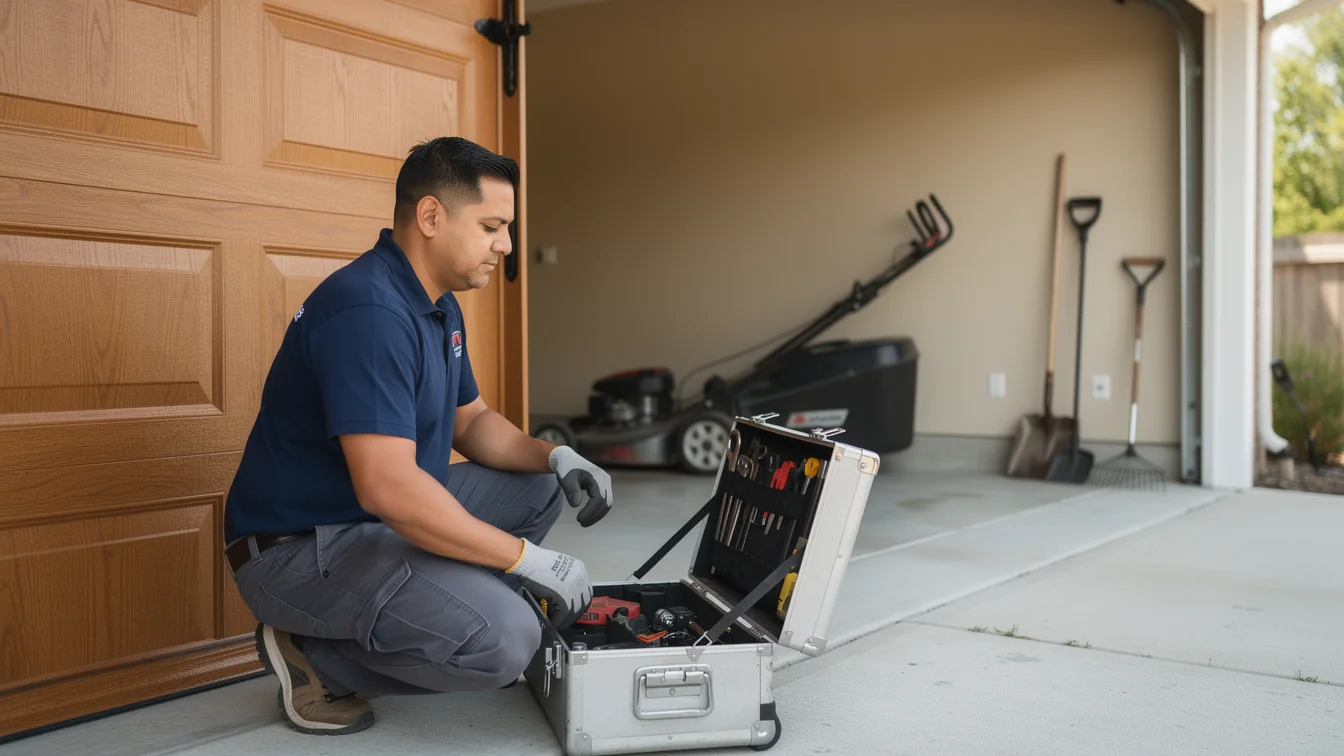
A service call in Georgetown checks hardware built for 1980s-90s construction and mild-climate wear - here's what gets inspected, adjusted, and left alone.
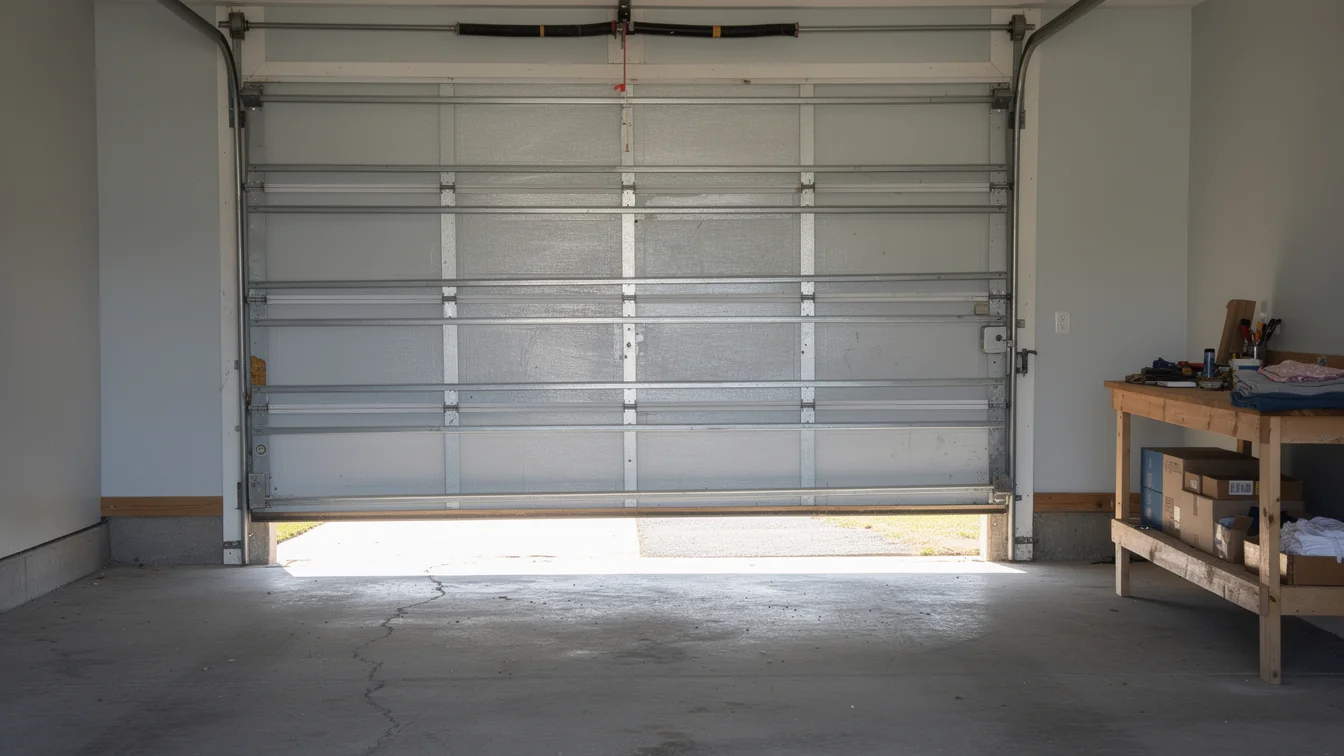 Why So Many Georgetown Garage Doors Have No Insulation at All
Georgetown's housing stock spans 1957 to 2018, median 1993 - a lot of doors went up before insulation was standard.
Ready when you are
Need a garage door sorted in Georgetown?
Georgetown Garage Door Pros repairs and installs garage doors, springs and openers in Georgetown, TX and the surrounding area.