 What That Sound Is Actually Telling You
Georgetown homes built between 1957 and 2018 carry different hardware, and that age gap plus the mild-with-freeze climate changes what a grinding or popping door is actually telling you.
When an Older Georgetown Garage Door Is Still Worth Fixing
A look at when a 1980s or 90s garage door in Georgetown is worth fixing versus replacing, based on local housing age and climate.
Local detail
The Situation
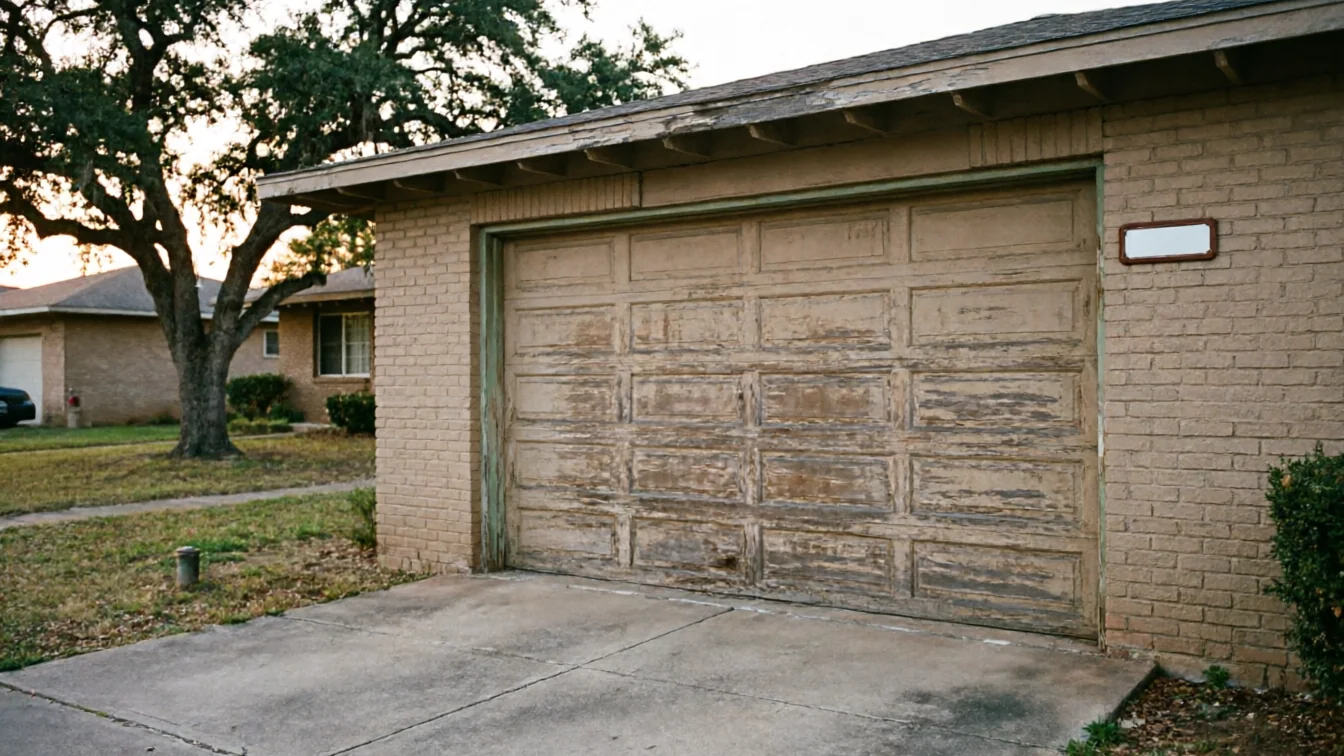
Georgetown's housing stock runs from 1957 up through new builds finished in 2018, but the median build year sits around 1993, and across the ten named pockets of town - from Serenada and Berry Creek out to Sun City Texas - most of what's standing went up in the 1980s and 90s. That means a lot of original garage doors are now thirty to forty years old. Not every one of them needs to come out. A door from that era with a steel skin, standard torsion spring, and a chain-drive opener is usually a simple, well-understood machine. If the track is straight, the panels aren't rusted through, and the springs are rated for the door's weight, repair is often the right call - new rollers, a spring swap, a tune on the opener chain, and the door runs another decade. Where it stops making sense is when the door itself has failed structurally: bent panels that won't seat right, a bottom section soaked and swollen from years against the slab, or hardware so outdated that finding parts means custom-ordering instead of pulling off a shelf. At that point you're not fixing a door, you're rebuilding one piece at a time, and the math usually tips toward replacement.
The area
How Local Conditions Play In
Georgetown sits in a mild climate band with occasional freeze nights, not the deep-freeze winters or the triple-digit humidity swings that chew through hardware fast. That's good news for an older door - steel panels and torsion springs here don't fight the same expansion-and-contraction cycle you'd see somewhere with hard freezes most of the winter. But occasional freeze still matters. A night or two below freezing a few times a season is enough to stiffen grease in an opener that hasn't been serviced in years, and to make a worn spring more likely to snap on the next cold morning rather than hold on another season. On a 1980s or 90s door that's never had the springs replaced, that's often the first sign something's wrong - not a dramatic failure, just a door that suddenly feels heavy to lift by hand on a cold morning. Because the swings here are mild rather than extreme, a door in otherwise decent shape doesn't need to be replaced just because of weather. It needs the lubrication and spring tension checked on a schedule that accounts for those occasional cold snaps, not ignored until the cold snap finds the weak point for you.
What we find
Doing Nothing For Now
If your door is original to a house built in the 1980s or 90s and it's still opening smoothly, closing level, and not grinding or shuddering, there's no reason to replace it just because of its age. A lot of Georgetown's older stock still has serviceable doors - sound panels, hardware that can be lubricated and adjusted rather than torn out. Doing nothing, in that case, is a legitimate choice, not neglect. Where we draw the line is parts. We don't stock every panel style or hardware pattern that shipped on doors from that period, and matching an exact panel on a thirty-year-old door can mean a special order with a real wait attached. If one panel is dented but the rest of the door is sound, that wait might still beat replacing the whole door - but it's worth knowing going in that it won't be same-day. For a homeowner just watching a door that's a little noisy or a little slow, the honest answer is often: keep an eye on it, get the springs and rollers checked once, and don't let anyone talk you into a full replacement before that inspection happens.
How we work
The Common Mistake
The mistake we see most with the 1980s and 90s doors common around Georgetown is replacing the whole unit when the actual failure is one part - almost always a spring, sometimes an opener. A torsion spring that's reached the end of its cycle life makes the door feel heavy or refuse to open at all, and to someone standing in the garage that can look like the door itself has died. It hasn't. The track, the panels, and the frame on a door that age are often still sound, especially given how mild the climate here is on the hardware compared to places with harder winters. Swapping the spring and checking the cable and rollers while you're in there usually solves it for a fraction of what a new door costs installed. The opposite mistake happens too - patching a door with rusted-through bottom panels or a badly bowed track over and over because replacement feels like the bigger expense, when at that point you're paying for labor on a door that's going to need the same repair again within a year or two.
Questions
Common questions
Is my garage door too old to repair if it's from the 1980s or 90s?
Not necessarily. A lot of Georgetown's housing stock dates to that period, and a door from then is usually a simple torsion-spring or extension-spring setup that's easy to service. Age alone isn't the deciding factor - the condition of the panels, track, and springs is. If those are sound, repair is often the cheaper and faster path.
Does Georgetown's climate shorten the life of an older garage door?
Georgetown's climate is mild with only occasional freezes, which is easier on garage door hardware than places with hard winters. The main risk is that an occasional cold night can be the moment a spring that's already worn finally gives out, so a door that's felt fine all year can suddenly feel heavy on a cold morning.
Can you always find parts for an older door?
Not always same-day. We don't carry every panel style or hardware pattern used on doors built decades ago, and matching one exactly sometimes means a special order with a wait. For a single damaged panel on an otherwise sound door, that wait is often still worth it compared to replacing the whole door.
Recommendation
You Might Also Like
More garage door guides for Georgetown homeowners.
What That Sound Is Actually Telling You
Georgetown homes built between 1957 and 2018 carry different hardware, and that age gap plus the mild-with-freeze climate changes what a grinding or popping door is actually telling you.
 Why So Many Georgetown Garage Doors Have No Insulation at All
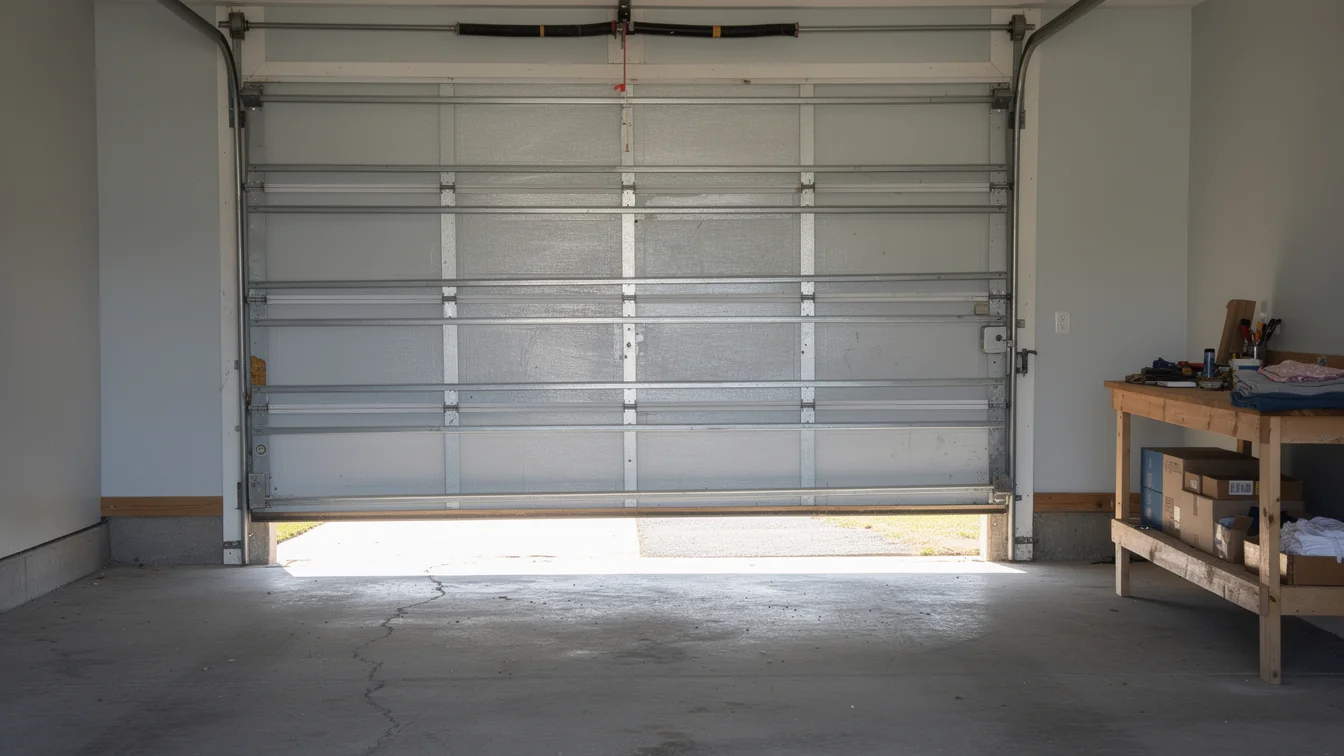
Georgetown's housing stock spans 1957 to 2018, median 1993 - a lot of doors went up before insulation was standard.
 What's Actually Included When You Call for Garage Door Service
A service call in Georgetown checks hardware built for 1980s-90s construction and mild-climate wear - here's what gets inspected, adjusted, and left alone.
Ready when you are
Need a garage door sorted in Georgetown?
Georgetown Garage Door Pros repairs and installs garage doors, springs and openers in Georgetown, TX and the surrounding area.