The Symptom
The call usually starts the same way: the door is heavy to lift by hand, or the opener strains and reverses halfway up, or the panels have started to bow at the bottom corner.
Weatherstrip daylight gaps
Sometimes it's simpler than that - the door just won't sit flush against the weatherstrip anymore, and you can see daylight along one edge. What's actually happening is that the original door and track were sized for a house built decades ago, and the hardware has worn past the point where adjustment fixes it.
Gradual tension loss
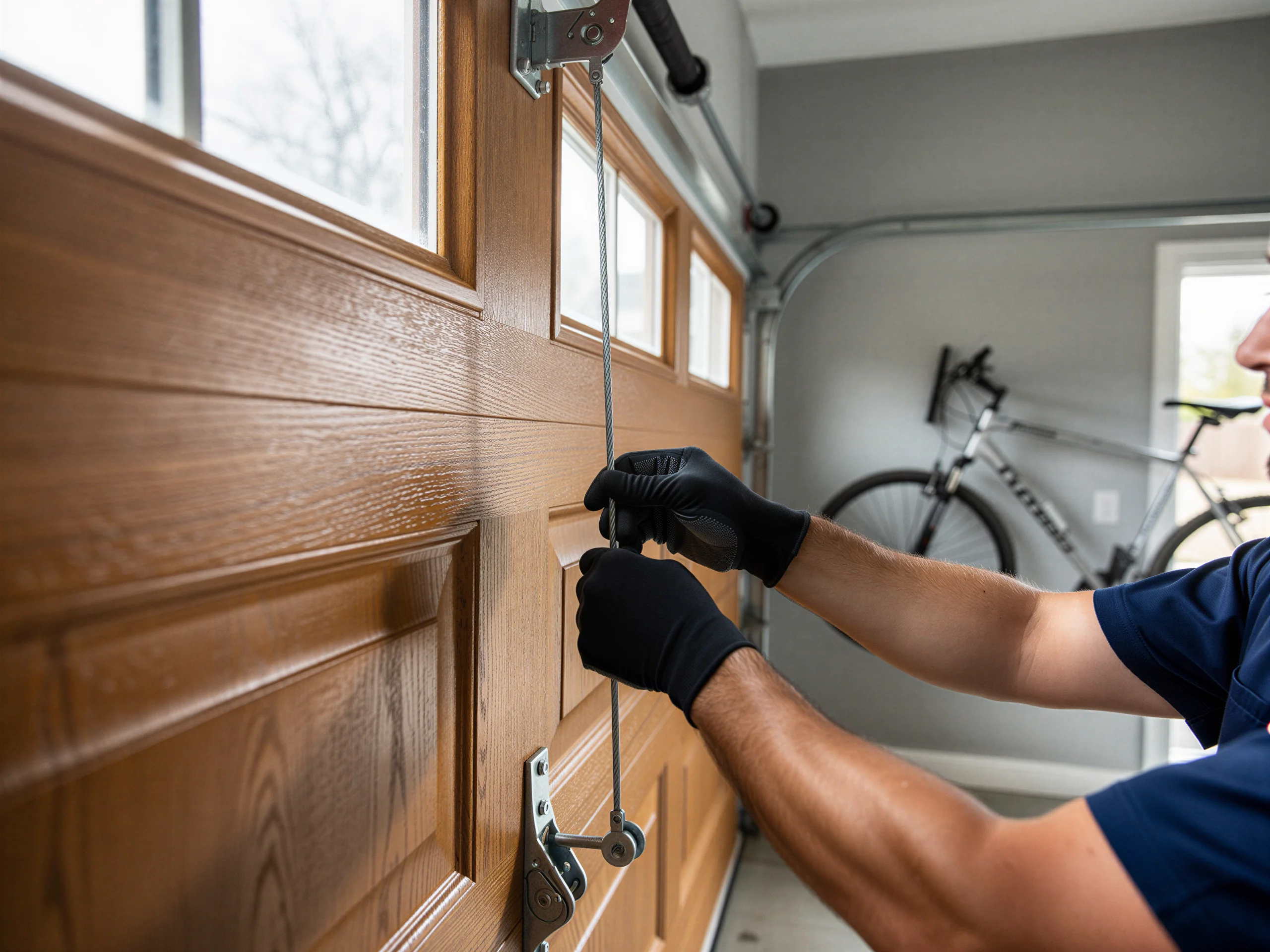
On older torsion setups the spring loses tension gradually, so the symptom creeps in over months rather than showing up overnight. You notice it when the door feels twice as heavy as it did last winter.
Undersized newer hardware
In newer construction the complaint is different - a door that's technically fine but was installed with hardware a notch too light for its size, so it works but works hard, and the opener motor takes the strain that the spring should be carrying. Either way, by the time you're calling, the fix usually isn't a thirty-second adjustment. It's a replacement decision, and that's the conversation this page is for.
Why This Fails Locally
Georgetown's housing stock runs from 1957 up through new builds finishing as recently as last year, with the median house dating to 1993 - but most of what's actually on the ground across the area's named neighborhoods is 1980s and 90s construction. That matters for doors because builder-grade installs from that era used lighter-gauge track and spring sizing than what's standard now, and a lot of those original doors are still in place, just tired.
The climate band here is mild with occasional freeze, which sounds easy on hardware compared to a true winter climate - and mostly it is. But occasional freeze is its own problem: metal track and torsion springs that sit at ambient temperature all year suddenly contract on the handful of nights it drops below freezing, and that's exactly when a spring that's been losing tension for years finally lets go. It's not metal fatigue from constant cold, it's the swing.
So you get two failure patterns stacked on top of each other: aging 80s/90s hardware that was never built to today's spec, hitting occasional cold snaps it was never tuned for. A house built in 1993 and a house built in 2018 fail for different reasons, and the install that fixes one won't fix the other.
The DIY Question
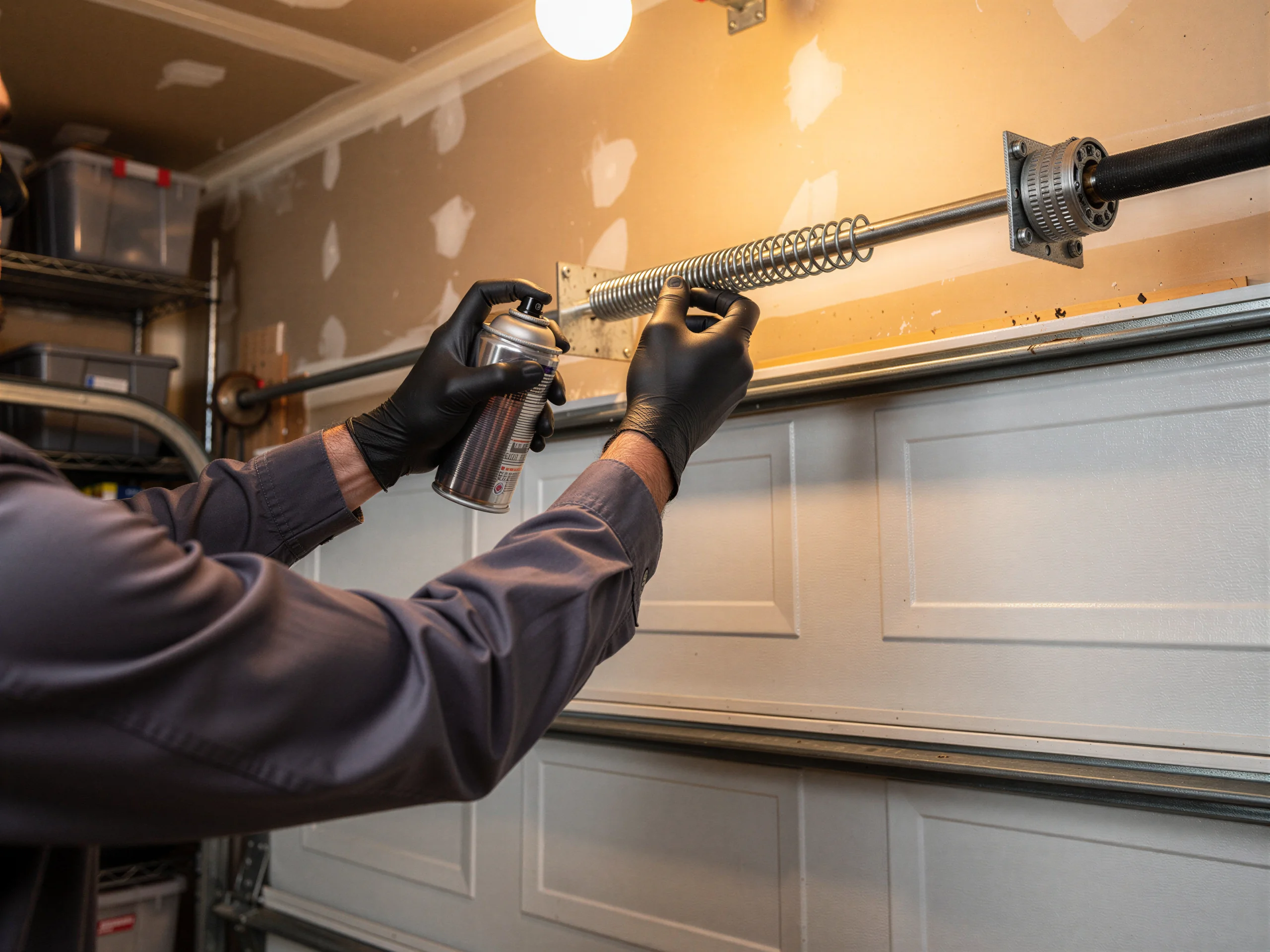
A lot of this is adjustable without a pro - tightening hinges, lubricating rollers, squaring the track. If the door is just noisy or sticky, you can often buy yourself real time with an hour and a can of the right lubricant.
Specialized winding tools
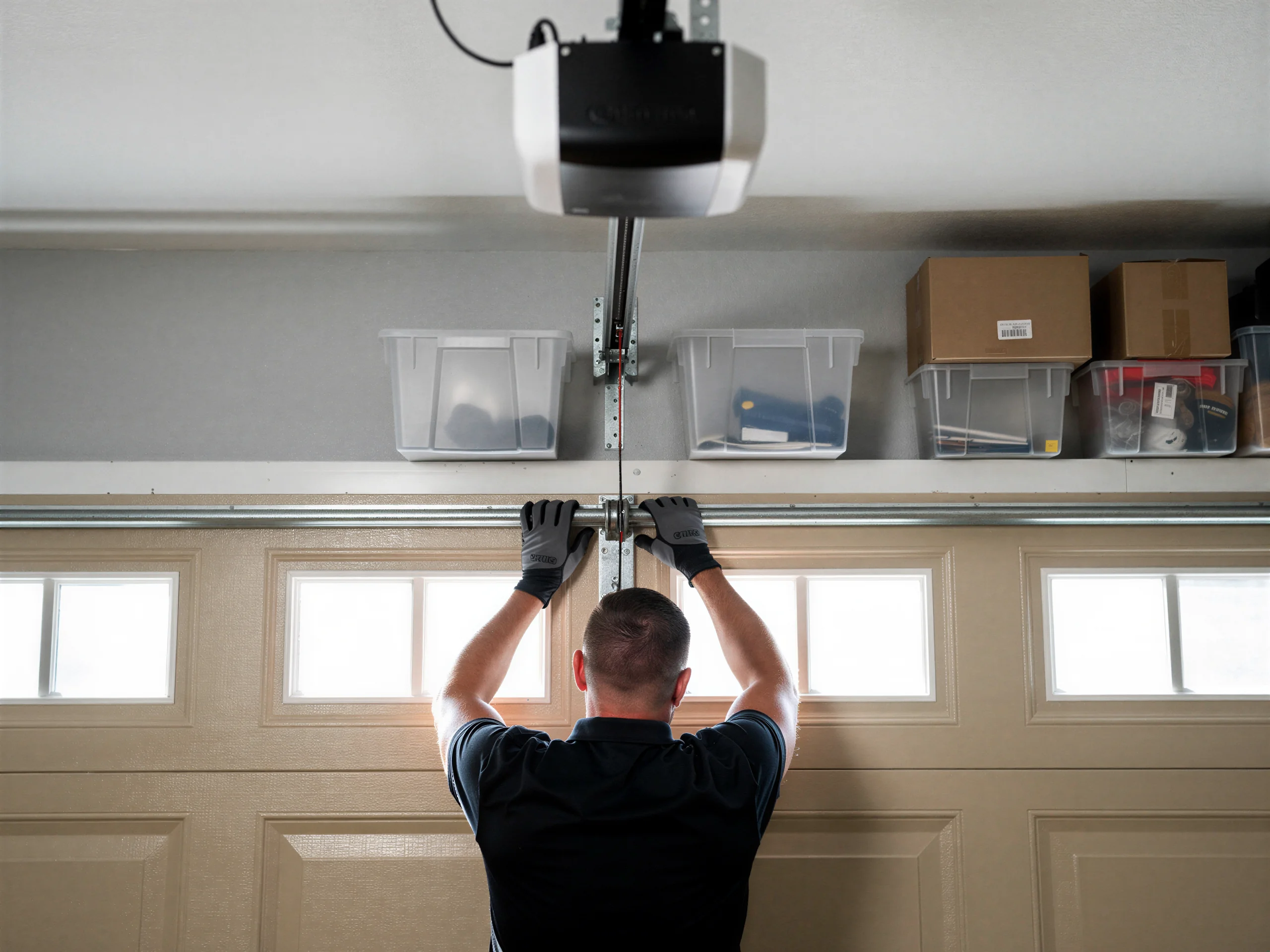
What you can't safely do yourself is anything involving the torsion spring. These are wound under heavy tension and the tools to set that tension correctly aren't something most homeowners own or should buy for a one-time job. We've seen the injuries this causes, and they're bad enough that we won't talk someone through it over the phone.
Worn drum limits
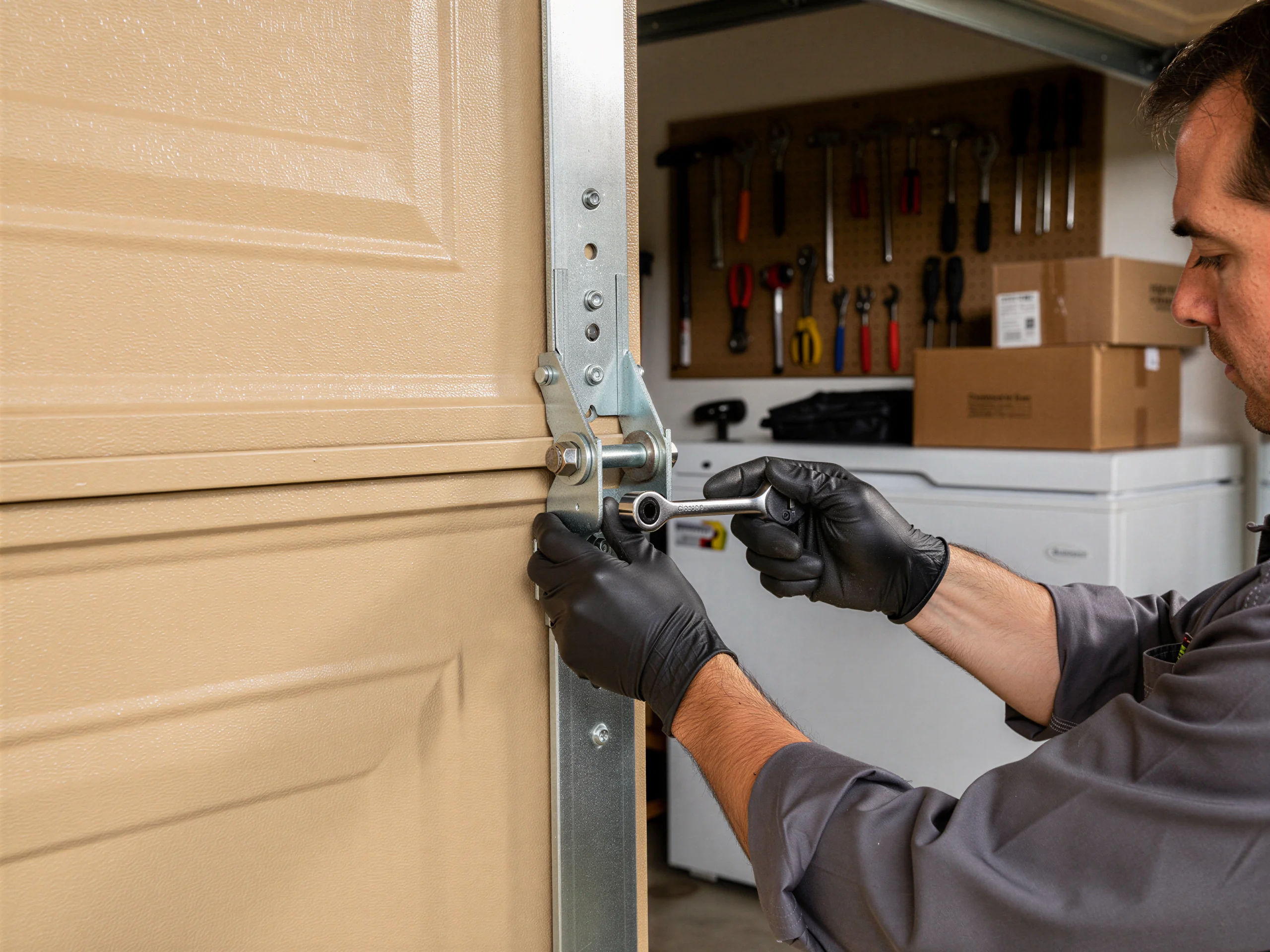
The honest limit on our side: if your door is from the 1980s or 90s era stock common across this area and the track is bent or the drums are worn, we're not going to quote you a spring swap and call it done.
Patching moves failures
Patching old hardware onto a new spring just moves the next failure a year down the road. At that point full replacement is the straighter path, and we'll say so even when a repair would be the easier sale.
What You Pay
We don't have a flat number to hand you here, because what a Georgetown install costs depends on what's actually wrong - a straight spring and hardware swap on an existing door opening is a different job than replacing a door that's the wrong size for a newer opening, or dealing with track that's been bent out of true.
Pricing drivers list
What we can tell you is what drives the number: door material and insulation level, torsion spring sizing for your door's weight, whether the opener needs replacing alongside the door, and how much of the existing track and hardware is salvageable versus worn past reuse.
Original drums and bearings
On the older 80s/90s builder-grade installs common in this area, we often find the drums and bearings are original too, which adds to the job but also means you're not paying twice in two years.
Written quote after inspection
Get a number by having someone look at the actual door - we'll walk the opening, check the spring and track condition, and give you a written quote before anything's touched.
Talk to a local pro
Garage door service in Georgetown?
Same-day service with honest, upfront quotes.