The Symptom
The door still opens, but it doesn't open right. It jerks at the halfway mark, or the opener strains and groans before it catches. Maybe the door drifts closed a few inches on its own, or one side drops faster than the other when you hit the wall switch.
Silent wear before failure
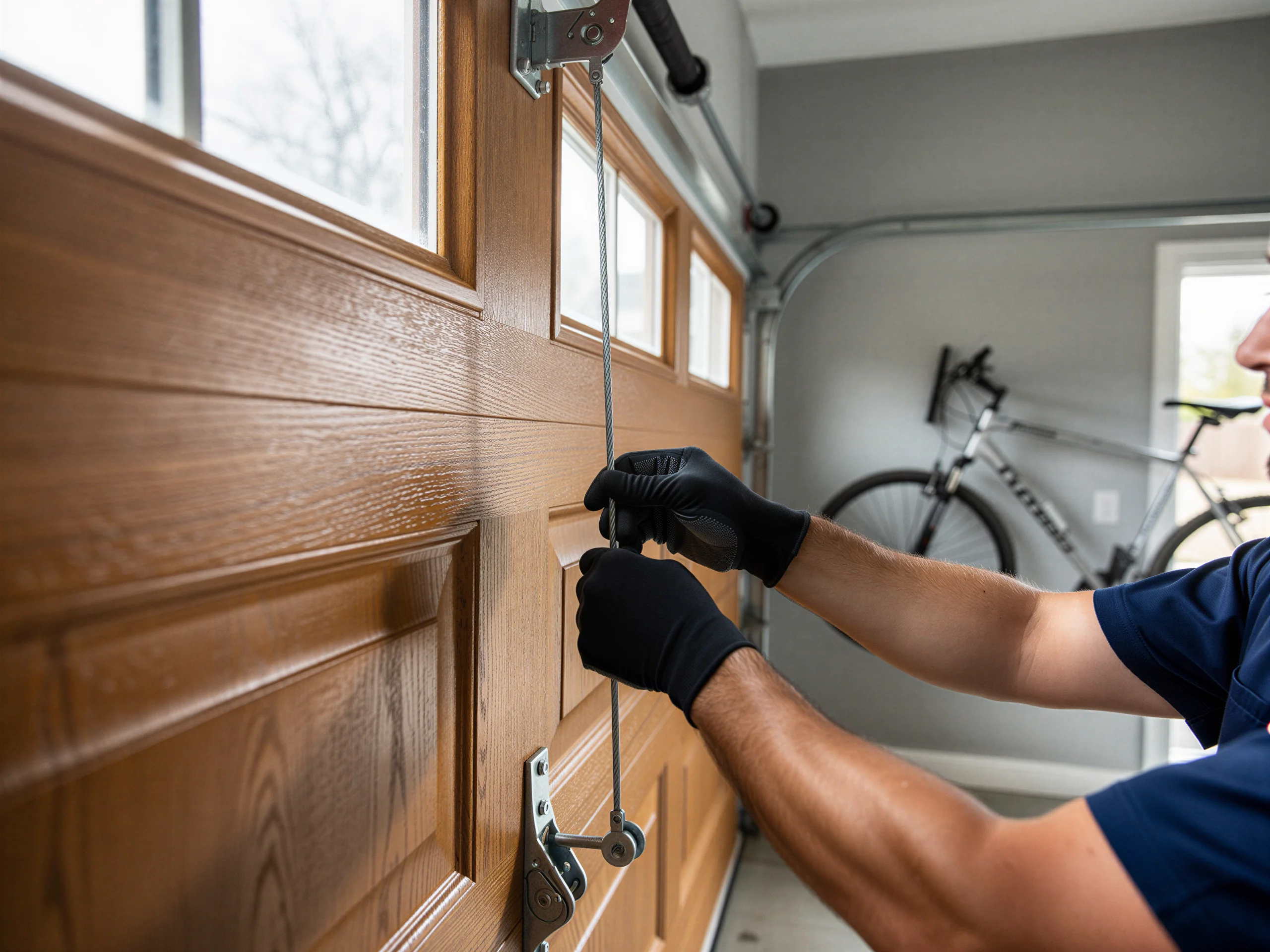
None of that stops the door from working today. That's exactly why it gets ignored - until a cable snaps or a spring lets go and the door won't move at all. Other versions of the same complaint: a roller that clicks on every pass, a track bracket that's worked loose from the framing, an opener that runs louder than it used to, or weatherstripping that's cracked and letting daylight under the bottom panel.
Small problems compound
Each one is small on its own. Together they're the usual path from a working door to a dead one, and almost none of them show up as a hard stop until they do.
Catching early drag
This is the service people search for after they've noticed the drag or the noise but before anything has actually failed. It's cheaper and a lot less disruptive to catch it at this stage than after the door is stuck shut with a car trapped behind it.
Why This Fails Locally
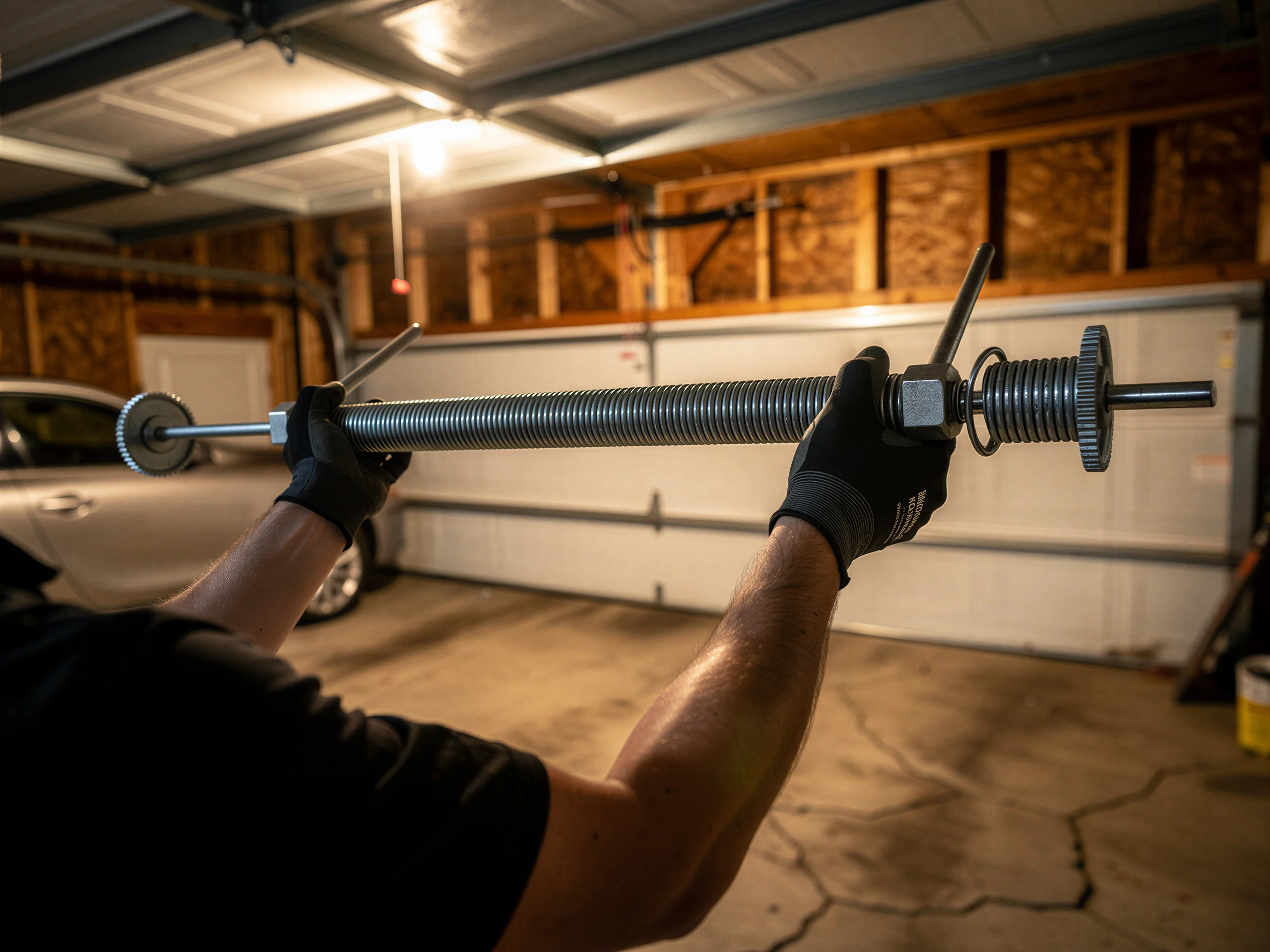
Housing across this service area was built anywhere from 1957 to 2018, but the bulk of it - across the ten named areas we work - went up in the 1980s and 90s. That matters because torsion springs have a duty cycle. A spring rated for roughly 10,000 cycles doesn't care what year it is; it cares how many times the door has opened. A lot of those 1980s and 90s doors are sitting right at or past that number now, with original hardware nobody's touched.
The climate here is mild with occasional freeze, which sounds easy on equipment compared to a true winter market, and in some ways it is - no deep frost heave cracking slabs, no months of road salt eating springs. But mild-with-freeze means metal hardware goes through a lot of expansion and contraction across the year: hot slab in July, a hard freeze night in January, back to 70s a week later. That cycling is what dries out lubricant on rollers and hinges and lets torsion springs lose a little tension every season without anyone noticing, until the day they don't catch the door at all.
It's not a dramatic failure mode. It's a slow one, built into the age of the stock and the swing of the weather, and it's why maintenance here is about catching wear, not storm damage.
The DIY Question
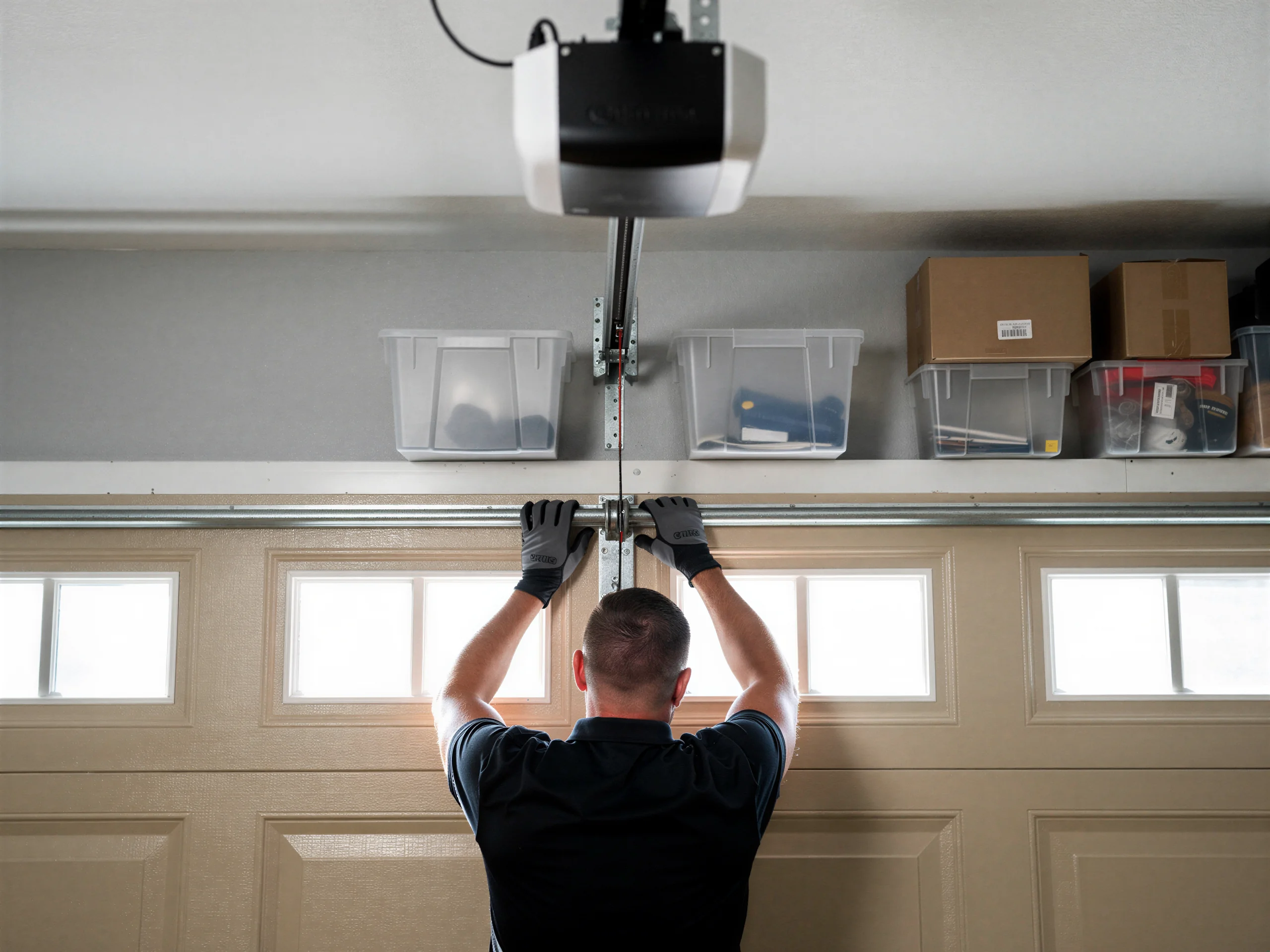
Some of this you can do yourself. Visually check the cables for fraying, listen for grinding in the opener, and wipe down the tracks so you're not running the rollers over dust and old grease.
Garage-rated lubricant only
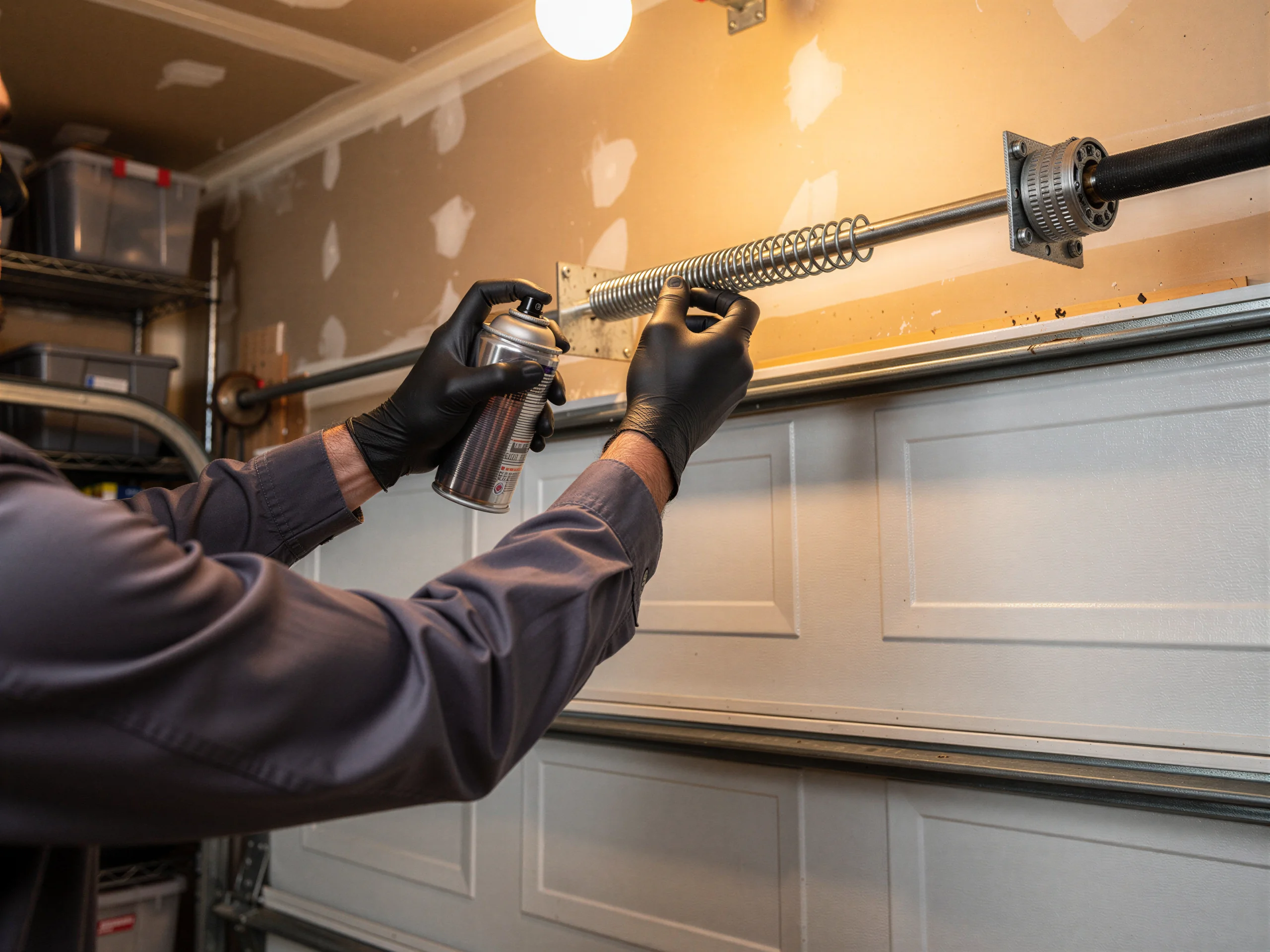
Lubricating rollers and hinges with the right garage-door-rated lubricant - not WD-40, which washes grease out rather than adding it - is a ten-minute job most owners can handle twice a year. What you shouldn't touch is the torsion spring itself.
Judging remaining spring life
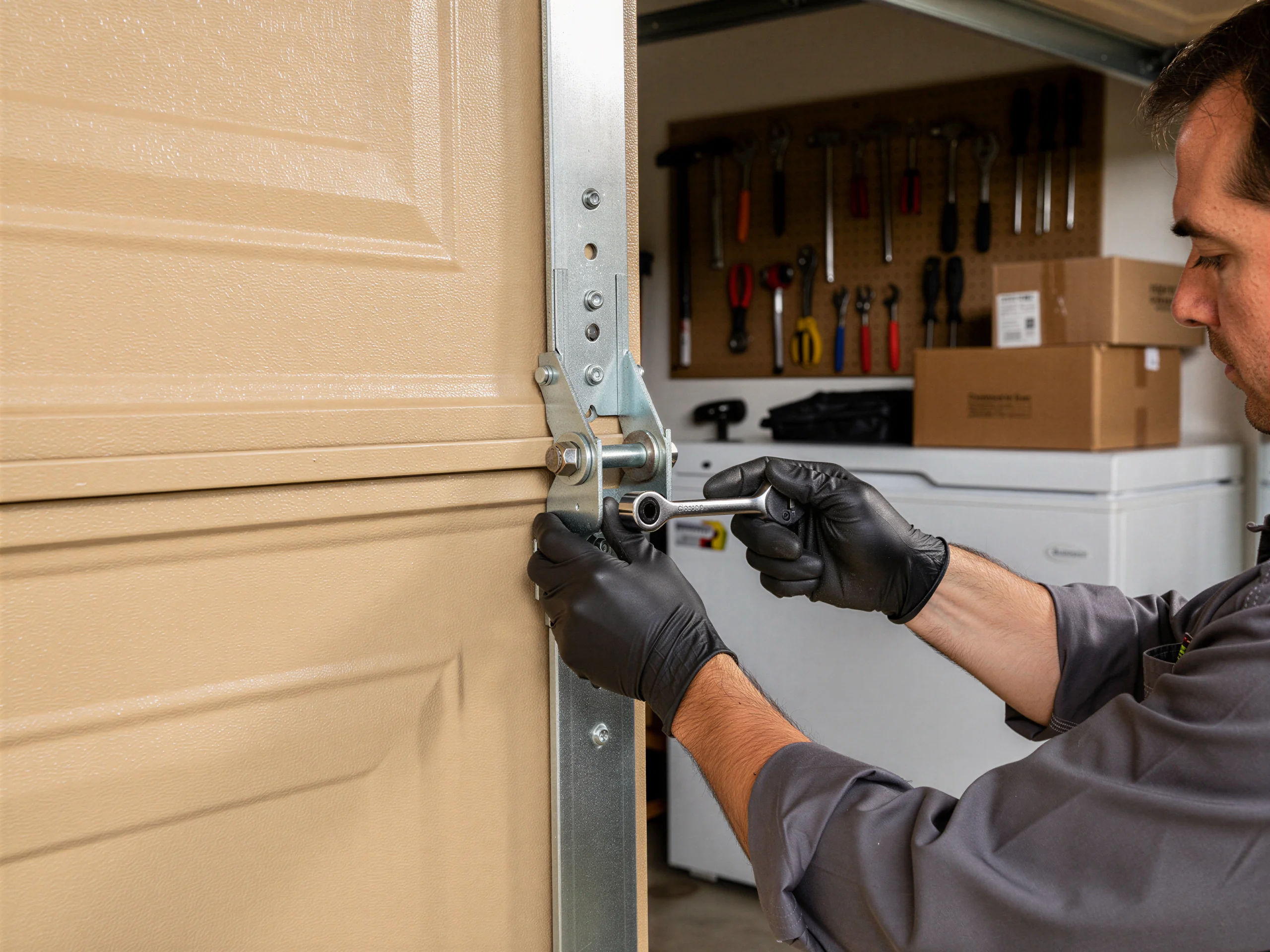
It's under enough tension to do real damage to a hand or a face if it releases wrong, and there's no safe way to eyeball how much life is left in one. Same goes for adjusting cable tension or messing with the bottom bracket - those are jobs built around specialized tools for a reason, and the parts are cheap compared to an ER visit.
Call when things change
Honestly, if your door is quiet, balanced, and opens evenly, you don't need us out there on a schedule just to say it's fine. Call when something's changed - new noise, new drag, new hesitation - not on a calendar you invented. That's the one piece of this we won't oversell.
What You Pay
We don't post a flat maintenance price here because what a visit costs depends on what the door needs - a quick lube-and-adjust on a door that's been looked after is a different job than one where the rollers are seized and the opener's limit switches are off.
Price stated before work
We'll tell you the number before anything gets touched, not after. What we can tell you is how the decision usually breaks down for owners in this area. Across the roughly 26,391 owner-occupied houses we cover, the households we see getting ahead of problems are the ones who treat a maintenance call as cheaper than an emergency one - which it almost always is, since a dead spring on a Saturday costs more in both money and hassle than catching it worn.
Budgeting for upkeep
With a median household income of $99,368 across the service area, most owners here aren't choosing maintenance because they're stretched - they're choosing it because the math works out.
Mixed build eras
From Serenada three miles out to Jonestown nineteen miles east, we're working on doors built across a fifty-year span, not one builder's run, so no two jobs price the same. That's the honest answer: see the door, then talk price.
Talk to a local pro
Garage door service in Georgetown?
Same-day service with honest, upfront quotes.